
 By
ByYes, you can take shilajit with a daily multivitamin. For most healthy adults, it’s a low-risk combination. A multivitamin covers baseline nutrition. Shilajit adds fulvic acid and its own mineral profile. The main thing to check before combining them is overlap: are you doubling up on iron, zinc, or fat-soluble vitamins anywhere else in your routine?
What is shilajit?
Shilajit is a mineral-rich resin that forms over centuries in high-altitude mountain rock, most commonly sourced from the Himalayas and Altai ranges. It contains fulvic acid along with 80+ trace minerals, and it’s traditionally used to support:
- Daily energy and stamina
- Exercise recovery
- Healthy testosterone levels in men
- Nutrient absorption
- Cognitive function and focus
What’s in a multivitamin?
A typical daily multivitamin contains:
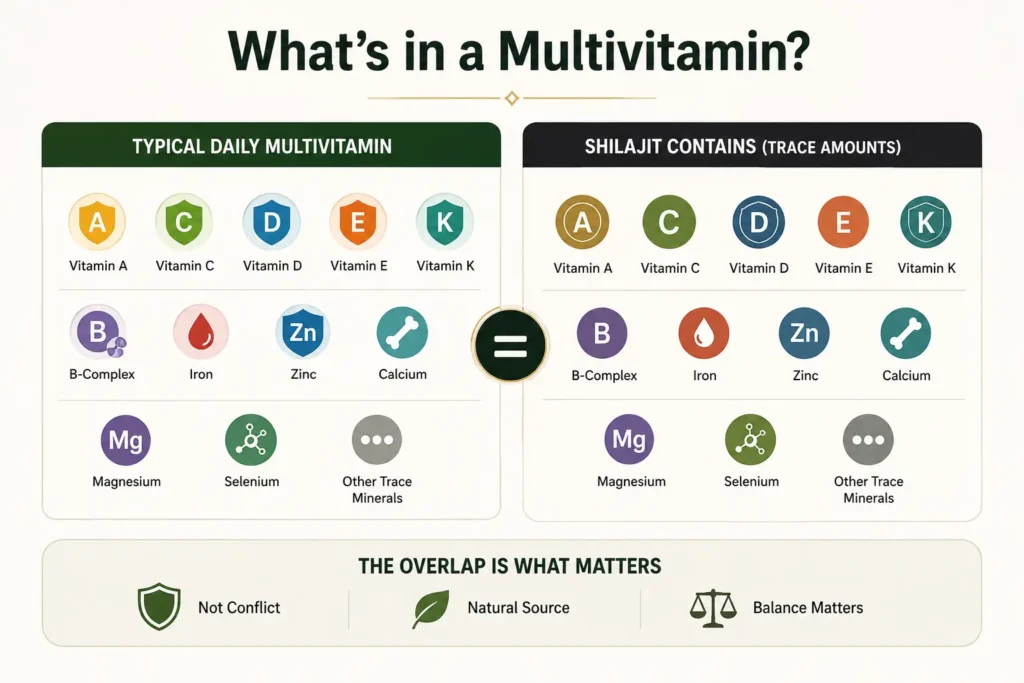
- Vitamins A, C, D, E, K, and the B-complex
- Iron (in many, but not all, formulas)
- Zinc
- Calcium
- Sometimes magnesium, selenium, and other trace minerals
Shilajit already contains many of these same trace minerals, in smaller amounts. The overlap is what matters here, not conflict.
Why people combine shilajit and a multivitamin
Most people aren’t adding shilajit to replace their multivitamin. They’re adding it on top of an existing routine for energy, stamina, or general wellness support.
A multivitamin covers baseline nutritional gaps. Shilajit adds fulvic acid and a mineral-and-compound profile that standard multivitamin formulas don’t include. Combined, they cover different ground rather than duplicate the same one.
Benefits of taking shilajit with a multivitamin
1. Broader nutritional coverage
A multivitamin fills common gaps (vitamin D, B12, iron for some people). Shilajit adds fulvic acid and trace minerals that aren’t typically part of standard multivitamin formulas.
2. Better nutrient absorption
Fulvic acid in shilajit helps transport nutrients. It may improve how well your body absorbs and uses the vitamins and minerals in your multivitamin.
3. More consistent energy
Multivitamins can correct energy dips caused by deficiencies like low B12 or iron. Shilajit is more directly linked to cellular energy production. Together, they cover energy from two different angles.
4. Support for a wider wellness routine
For people building a supplement routine from scratch, this combination is often the starting point before adding more targeted supplements like ashwagandha or magnesium.
Who may benefit most
This combination may help adults who:
- Already take a daily multivitamin and want to add targeted energy or stamina support
- Have a generally balanced diet but want broader mineral coverage
- Are building a supplement routine and want a simple, lower-risk starting combination
- Train regularly and want both baseline nutrition and performance support
Recommended dosage
| Supplement | Typical daily amount |
| Shilajit resin | 250-500 mg |
| Purified shilajit capsules | 250-500 mg |
| Daily multivitamin | As directed on the label |
Follow the multivitamin manufacturer’s dosing. Don’t assume more is better, especially with fat-soluble vitamins (A, D, E, K), which the body doesn’t clear as quickly as water-soluble ones.
The overlap to watch
Before combining the two, check your multivitamin label for:
- Iron. Shilajit isn’t a major iron source, so this usually isn’t a conflict. But if you’re already taking a separate iron supplement plus a multivitamin with iron plus shilajit, review your total intake with a doctor, especially if you have hemochromatosis or another iron-overload condition.
- Zinc and copper. Some multivitamins are heavy on zinc, and shilajit contributes trace zinc too. Rarely a problem at normal doses, but worth knowing if you’re also taking a separate zinc supplement.
- Fat-soluble vitamins (A, D, E, K). These build up in the body rather than flushing out like water-soluble vitamins. If your multivitamin already covers your daily needs, there’s no reason to add more from another source without checking your total intake.
How to stack shilajit and a multivitamin
Morning
- Multivitamin, with breakfast (many are better absorbed with food, especially fat-soluble vitamins)
- Shilajit (250-500 mg), with warm water or milk
Alternative split
- Multivitamin in the morning
- Shilajit in the early afternoon, if you want its energy effect to carry through an afternoon slump instead of front-loading it at breakfast
| Goal | Suggested timing |
| Simplicity | Both with breakfast |
| Afternoon energy support | Multivitamin AM, shilajit early afternoon |
| Sensitive stomach | Take both with food, not on an empty stomach |
How long before you notice benefits?
- Multivitamin-related improvements (if correcting a deficiency): 2-4 weeks
- Shilajit’s energy and stamina effects: usually 2-4 weeks of consistent use
- Combined effects on overall energy and wellness: most people report a difference by week 4-6
If you’re not deficient in anything to begin with, a multivitamin’s effects will be subtler. It’s designed to maintain baseline levels, not create a noticeable boost on its own.
Are there side effects?
Most healthy adults tolerate both supplements well when taken as directed.
Shilajit
- Mild stomach discomfort
- Digestive upset if taken on an empty stomach
- Rare allergic reactions
Multivitamins
- Nausea, especially without food
- Constipation (more common with iron-containing formulas)
- Unpleasant aftertaste with some formulations
Taking both with a meal resolves most of these issues.
Who should avoid this combination
Talk to a healthcare professional before combining shilajit and a multivitamin if you:
- Are pregnant or breastfeeding (prenatal vitamins have different formulations than standard multivitamins, and shilajit isn’t recommended during pregnancy)
- Have hemochromatosis or another iron-overload disorder
- Have chronic kidney disease
- Take blood pressure or diabetes medication
- Already take multiple separate mineral supplements
Tips for best results
- Read your multivitamin label before adding shilajit, not after
- Choose purified, lab-tested shilajit
- Take both with food to reduce stomach upset
- Avoid adding a second multivitamin or extra mineral supplements on top of this combination without reviewing your total daily intake
- Give it 4-6 weeks before judging whether it’s working
Common mistakes to avoid
- Assuming “natural” supplements can’t overlap or add up
- Taking a multivitamin, a separate mineral supplement, and shilajit all at once without checking totals
- Expecting a multivitamin alone to produce noticeable energy changes if you’re not actually deficient in anything
- Buying unpurified shilajit, which carries a higher contamination risk
- Skipping the label check on iron and fat-soluble vitamins
My Experience
I almost skipped this check myself. Was taking a generic multivitamin with 18mg iron plus shilajit daily for about 2 months before I actually read my multivitamin label closely. Pulled bloodwork at my next physical and my ferritin was on the higher end of normal, not dangerous, but enough that my doctor suggested dropping the iron-containing multivitamin for an iron-free version. Simple fix, but I wouldn’t have caught it without asking for the panel.
FAQ
Can I take shilajit and a multivitamin every day?
Yes, most healthy adults can take them daily, unless a healthcare provider has advised otherwise.
Does shilajit replace the need for a multivitamin?
No. Shilajit contributes trace minerals and fulvic acid, but it doesn’t cover the broader vitamin range, like B12, D, and A, that a multivitamin provides.
Can women take shilajit with a multivitamin?
Yes, many women use this combination. Pregnant or breastfeeding women should avoid shilajit and use a prenatal formula instead of a standard multivitamin.
Will shilajit cause me to get too much iron or zinc?
Unlikely at normal doses. But if your multivitamin already contains iron or zinc and you’re also taking separate mineral supplements, review your total intake with a doctor.
Is this combination safe for long-term use?
Generally yes for healthy adults. As with any long-term supplement routine, periodic check-ins with a doctor, especially bloodwork covering iron and mineral levels, are a reasonable precaution.
Final thoughts
Shilajit and a daily multivitamin are a low-risk, commonly used combination. Manage overlap, not conflict. Check your multivitamin label for iron, zinc, and fat-soluble vitamin content before adding shilajit, take both with food, and give the combination 4-6 weeks before judging results.
References
- Vitamins and Minerals — NCCIH
- Multivitamin/mineral Supplements — Fact Sheet for Consumers, NIH Office of Dietary Supplements
- Research Breakdown on Shilajit — Examine
- Chemical Analysis of Native Himalayan Shilajit — PMC/NIH
- Shilajit During Pregnancy & Breastfeeding: What the Medical Evidence Actually Says
Also Read:
Almonds vs Shilajit: Benefits, Differences & Which Is Better?
Ginseng vs Shilajit: Which Adaptogen Is Better?
Can You Take Shilajit and Magnesium Together?
Disclaimer
This article is for informational purposes only. Please consult a licensed healthcare provider before starting any new supplement, especially if you are pregnant, breastfeeding, or on medication.

Reviewed by: Dr. Aarya Mehta, MD (India)
Internal medicine physician with an interest in health education, nutrition, metabolic health, dietary supplements, herbal ingredients, and responsible supplement safety information.
View full profile →Medical review date: August 12, 2026