 By
ByWelcome to my blog, Shilajit lovers. With the growing popularity of this natural supplement, the market has also seen a rise in low-quality and fake shilajit products.
Many people searching for fake shilajit vs real shilajit or shilajit original vs fake are trying to avoid wasting money or, more importantly, putting their health at risk. They want to learn how to spot fake shilajit before purchase.
Because Shilajit is a naturally occurring mineral resin, its quality depends heavily on sourcing, purification, formulation, and testing. Without proper processing, it can contain impurities or may not deliver the expected benefits at all.
In this guide, we’ll break down how to identify real shilajit vs fake shilajit, what to look for before buying, and how to make a safer choice.
In India, most Indian people call shilajit “Pahaad ka paseena.”
What is Real Shilajit?
Real Shilajit is a naturally formed resin that develops over centuries from decomposed plant matter in mountainous regions, especially the Himalayas and other famous regions called Altai, Nepal, etc.
It typically contains:
- Fulvic acid (key active component)
- Humic acid
- Trace minerals in ionic form
- Organic compounds that support energy and recovery
Authentic Shilajit is carefully purified to remove heavy metals and contaminants while preserving its natural composition. Without purification, you can’t eat shilajit directly. Shilajit is very dangerous to health.
What is Fake Shilajit?
Fake Shilajit refers to products that are artificially created, heavily diluted, or mixed with fillers like sugar, wax, coal, or synthetic substances.
In many cases, these products are designed to look like real Shilajit resin but lack the natural mineral composition and effectiveness.
Some fake Shilajit may also be poorly purified or contaminated, which can make it unsafe to use. One simple way to identify fake Shilajit is by its price. If it is extremely cheap, there is a high chance it may not be genuine.
Real Shilajit is often called the “black gold of the mountains” because it takes hundreds of years to form naturally. It cannot be produced quickly, so products that seem too cheap or too easily available should be approached with caution.
How Fake Shilajit is Made
Most people don’t realize that fake Shilajit is often manufactured, not mined.
Low-quality products may be created by:
- Mixing molasses or jaggery to mimic the sticky texture
- Adding asphalt-like substances or fillers
- Using low-grade mineral extracts without proper purification
These products are designed to look like real resin, but they lack the natural composition and benefits of authentic Shilajit.
This is why visual appearance alone is not enough to judge quality.
Common Red Flags of Fake Shilajit
When comparing real shilajit vs fake shilajit, there are a few warning signs that should not be ignored:
- Extremely low price compared to the market average
- No mention of lab testing or certification
- Overly sweet taste or artificial flavor
- Available only in the offline market
- Available only at roadside, mostly in the mountain areas of India
- No clear source location (Himalayan region, altitude, etc.)
- Unrealistic claims like “instant results” or “100% cure.”
If a product checks multiple red flags, it’s best to avoid it.
Comparison of Real Shilajit vs Fake Shilajit
| Feature | Real Shilajit | Fake Shilajit |
| Source | Natural Himalayan resin | Artificial or diluted |
| Texture | Sticky, tar-like, softens with heat | Hard, overly thick, or powdery |
| Solubility | Fully dissolves in warm water | Leaves residue or particles |
| Taste | Bitter, earthy | Sweet, artificial, or neutral |
| Smell | Strong, earthy odor | Chemical or mild smell |
| Color | Dark brown to black | Unnatural shine or inconsistent color |
| Purity | Lab-tested and purified | Often untested or unclear |
Why Purification Matters in Shilajit
Raw Shilajit, in its natural state, may contain:
- Heavy metals (lead, arsenic)
- Dirt and rock impurities
- Microbial contaminants
Proper purification is essential to make it safe for consumption. Adulterated shilajit can cause stomach problems
High-quality brands use:
- Traditional Ayurvedic purification methods
- Modern filtration and lab testing
Without shilajit purification, even “real” Shilajit can be unsafe. So purity is just as important as authenticity.
Can Fake Shilajit Be Harmful?
Yes, in some cases, fake or poorly processed Shilajit can pose health risks.
Possible concerns include:
- Exposure to heavy metals
- Digestive discomfort
- Lack of expected benefits
- Unknown additives affecting the body
This is why choosing tested and verified products is critical, especially for long-term use.
Test To Identify Original vs Fake Shilajit
If you really want original shilajit, then your shilat should pass all the tests below.
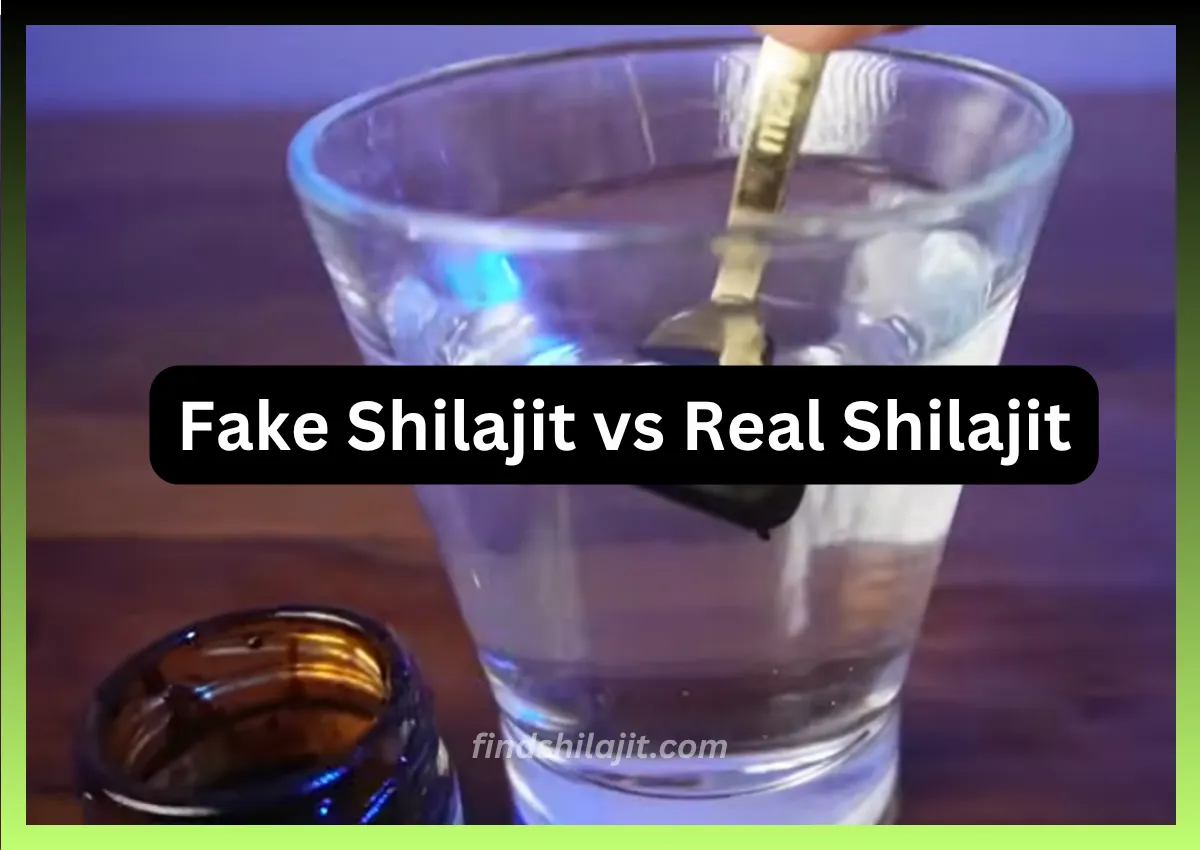
1. Water Dissolution Test
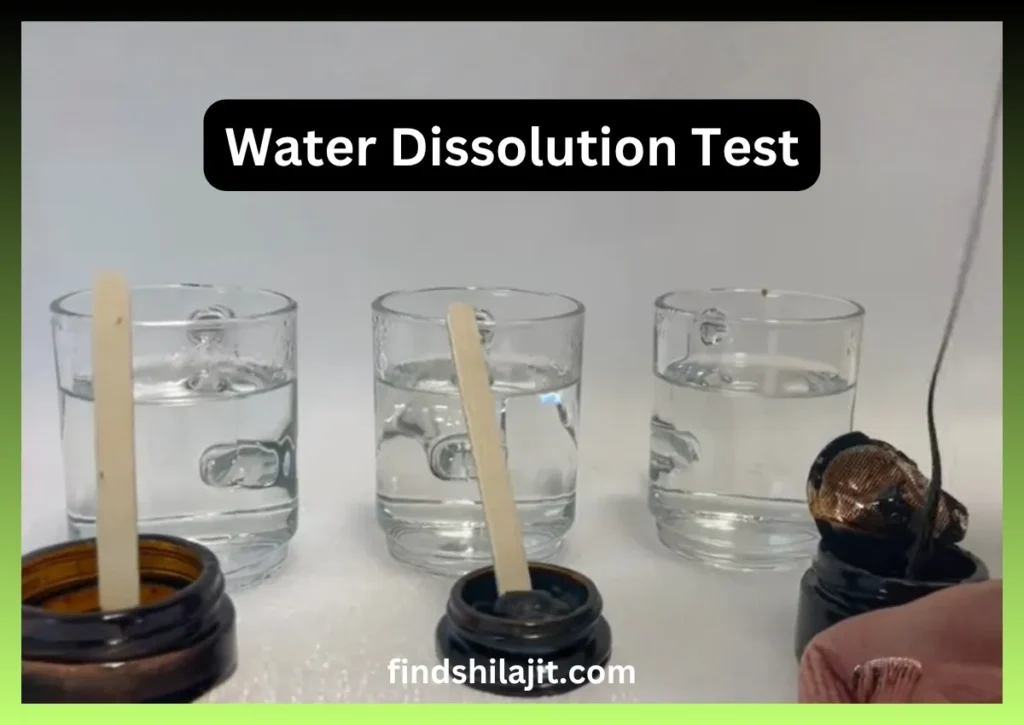
Real Shilajit dissolves completely in warm water, leaving no residue. Fake versions often leave particles or cloudiness.
2. Tongue Test
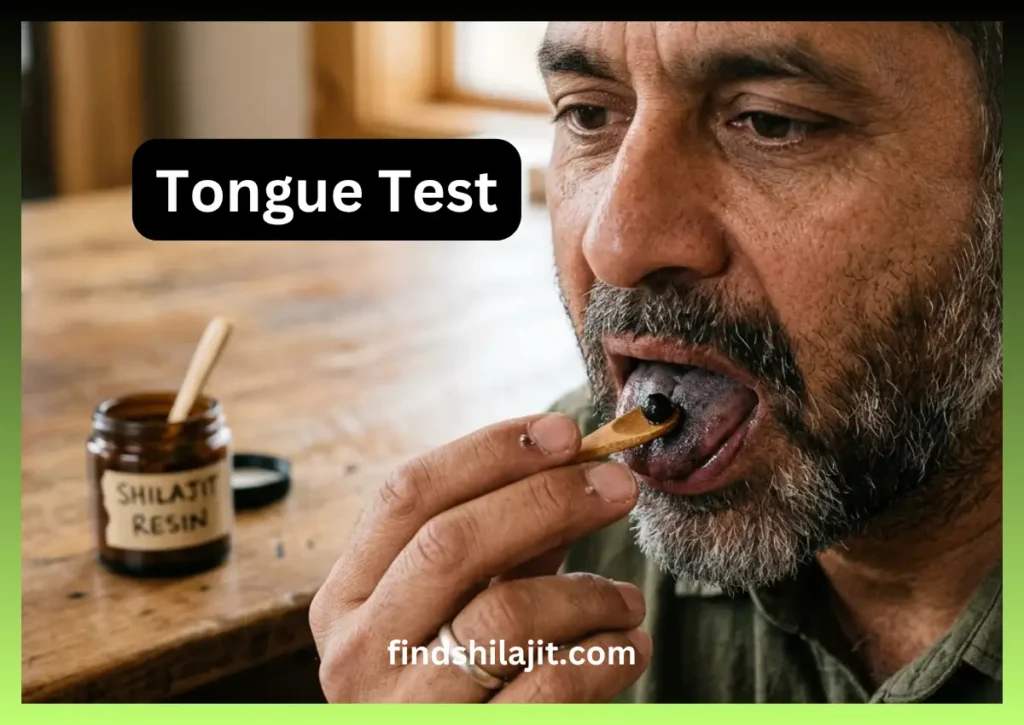
Authentic Shilajit has a strong, bitter, earthy taste. If it tastes sweet or overly pleasant, it may be mixed with additives.
3. Room Temperature Test
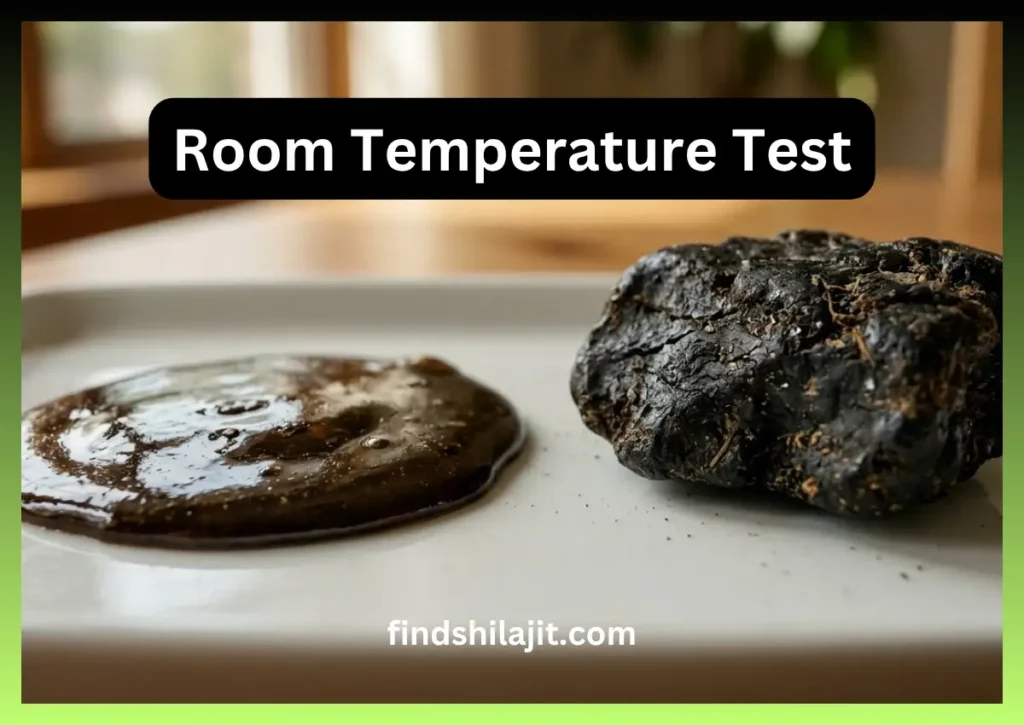
When exposed to heat, real Shilajit becomes soft and sticky. Fake products may remain hard or behave inconsistently.
4. Lab Testing Proof
Always check for third-party lab reports showing:
- Heavy metal testing
- Fulvic acid percentage
- Purity certification
5. Pliability Test for Shilajit Purity
Shilajit reacts to temperature changes. In heat, it becomes soft and sticky; in cold, it hardens and can break. This natural texture change is a key sign of authentic Shilajit.
6. Finger Touch Test
Roll a piece of Shilajit between your fingers. Pure Shilajit becomes soft and pliable when warm and hardens when cooled down. If it doesn’t change texture, it might be impure.
7. Color Test
Check the color of your Shilajit. Pure Shilajit is usually dark brown or black. If the color is unusual, like blue or red, it may be a sign of impure or fake Shilajit.
8. Charcoal Test
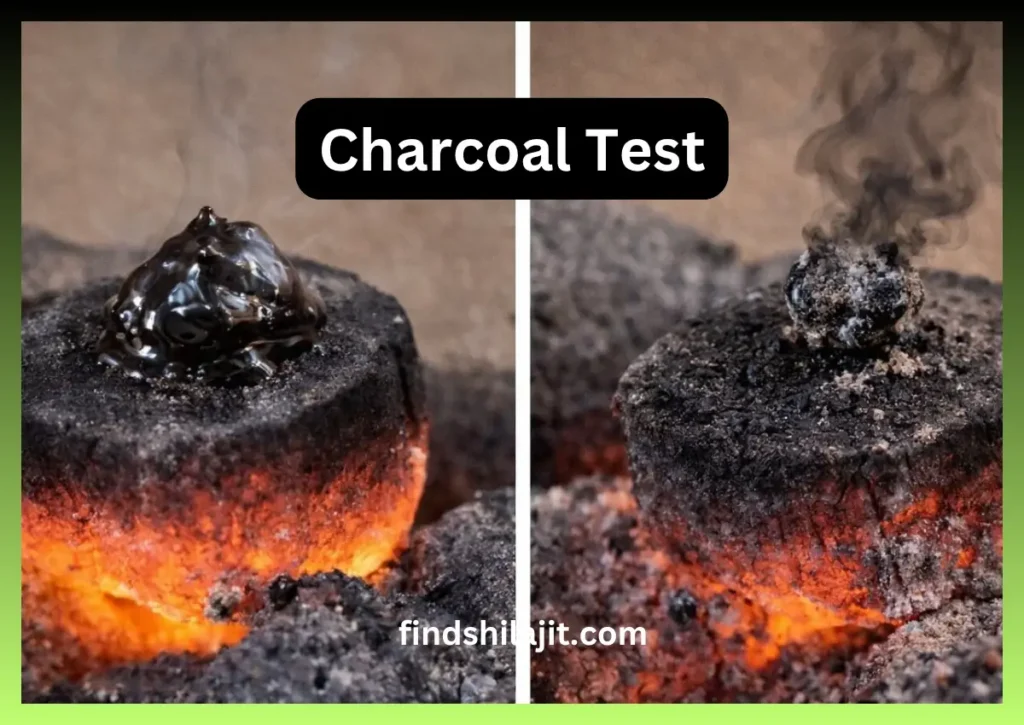
Place a small amount of Shilajit on hot charcoal. Pure Shilajit melts without leaving ash, while fake Shilajit burns with smoke and residue.
Why it matters: Real Shilajit doesn’t burn or leave ash; impurities do.
9. Odor Test
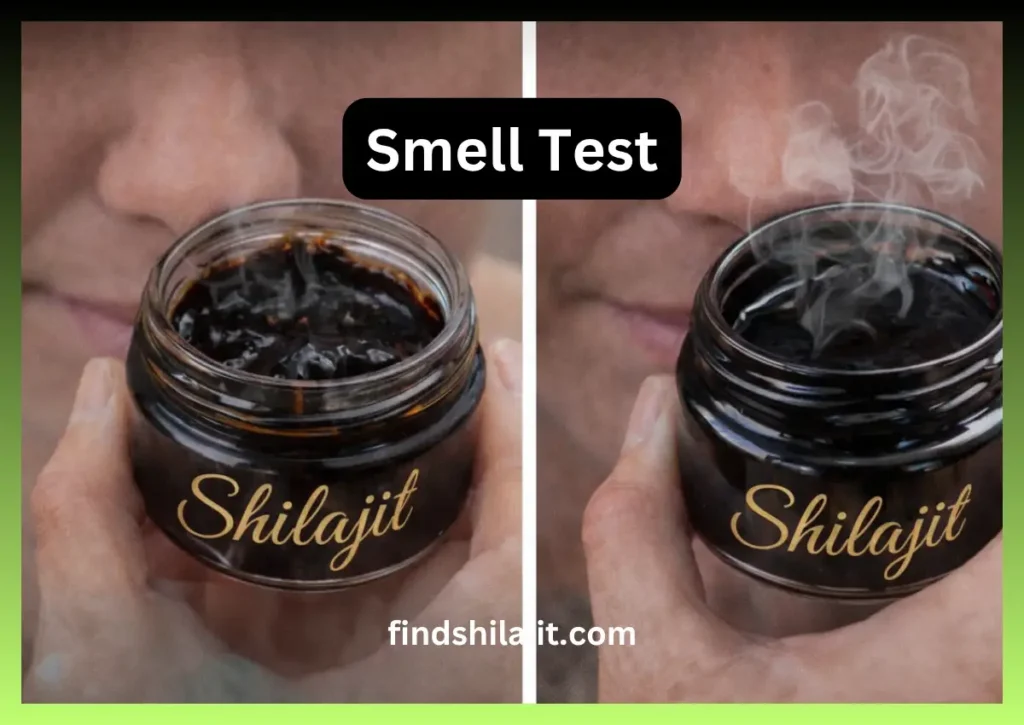
Check the smell and appearance of Shilajit. Pure Shilajit has a natural earthy smell and dark brown to black color. Fake Shilajit may look overly glossy and have a chemical or artificial odor.
10. Fridge Test
Place Shilajit in the fridge for 30–60 minutes. Pure Shilajit hardens and may crack slightly, while fake Shilajit stays soft or mushy due to additives.
Resin vs Gummies: Which is Easier to Verify?
- Resin: Easier to test (taste, dissolve, texture)
- Gummies/Capsules: Harder to verify because of added ingredients
If you are a beginner, gummies offer convenience, but resin provides more transparency in quality checks. You should know how to find fake shilajit gummies.
Lab Testing: What to Check Before Buying
When buying Shilajit, lab testing is one of the most reliable indicators of quality.
Look for:
- Heavy metal testing reports (lead, mercury, arsenic)
- Fulvic acid percentage
- Certificate of Analysis (COA)
- Batch-specific testing details
Brands that openly share these details are generally more trustworthy.
Tips to Buy Real Shilajit
- Look for Himalayan sourcing details
- Choose brands with third-party lab testing
- Avoid products with too many added ingredients
- Check customer reviews across multiple platforms
- Be cautious of very cheap products
- Check for Nutrition Facts
- Check for the brand’s mention on how to use
- Check product ingredient profile
Shilajit Purity Percentage Myths
Reality: Claims like 75–100% purity or fulvic acid are often marketing hype. Natural Shilajit typically contains 5–20% fulvic acid, while purified versions may reach 60–85% through lab processing.
Common Myths
- “100% Pure Shilajit” – Not possible; it naturally contains minerals and compounds.
- “Higher Fulvic % = Better” – Extremely high claims (90%+) can indicate fake or altered products.
- “Raw is Better than Purified” – Purification removes harmful contaminants and is safer.
Reality Check
Choose products with batch-specific lab reports (COA) showing realistic fulvic levels and low heavy metals. Avoid vague or generic claims.
At Last
When it comes to real shilajit vs fake shilajit, the difference is not just about quality but also safety. Authentic Shilajit supports energy, recovery, and overall vitality, while fake products may offer little to no benefit.
I hope I have explained well how to find fake shilajit. Taking the time to verify sourcing, testing, and product transparency can help ensure that what we are using is both effective and safe for long-term use.
Also Read:
Best Shilajit for Students – Benefits & Top Brands
Is Chuga Shilajit Legit? Real Customer Reviews
References
- Wikipedia – Shilajit Overview
Provides detailed information on origin, Himalayan sourcing, traditional uses, and safety concerns, including heavy metals.
View Research: Shilajit - PubMed Central (NIH)
Research on Shilajit’s fulvic acid and its potential cognitive and antioxidant benefits. - Andrologia (Wiley)
A study demonstrating increased testosterone levels after 90 days of purified Shilajit use.
View Research: https://onlinelibrary.wiley.com/doi/10.1111/and.12482
Disclaimer
This article is for informational purposes only. Please consult a licensed healthcare provider before starting any new supplement, especially if you are pregnant, breastfeeding, or on medication.

Reviewed by: Dr. Natha Thomas, PhD (USA)
Nutrition and supplement research professional interested in nutritional science, dietary supplements, nutrient bioavailability, scientific literature, and how research findings are communicated to consumers.
View full profile →Medical review date: April 29, 2026