
 By
ByShilajit has become extremely popular in recent years. Many people use it because they believe it boosts energy, increases testosterone, improves stamina, and supports overall health. You may have seen influencers, fitness experts, and supplement brands talk about it everywhere.
But with all this hype, one very important question continues to appear on Google:
“Is Shilajit bad for kidneys?”
This is a smart question to ask.
Our kidneys work like the body’s natural filter system. They remove waste, balance minerals, and help keep our blood clean.
Just like a water filter at home can get clogged if you pour dirty water into it, our kidneys can also get stressed if we take something that is not safe for them.
Shilajit is a natural tar-like substance, and like any supplement, it can affect different organs differently if not taken in purified form, at the right dose, and at the right time.
So before using it, it’s important to understand whether it truly helps kidney health or if it carries risks. Stay tuned, and please do reshare this post if you found it helpful.
Is Shilajit Good or Bad for Kidneys?
For healthy people using purified, lab-tested Shilajit at the right dose — it is generally safe for the kidneys and may even offer mild protective benefits.
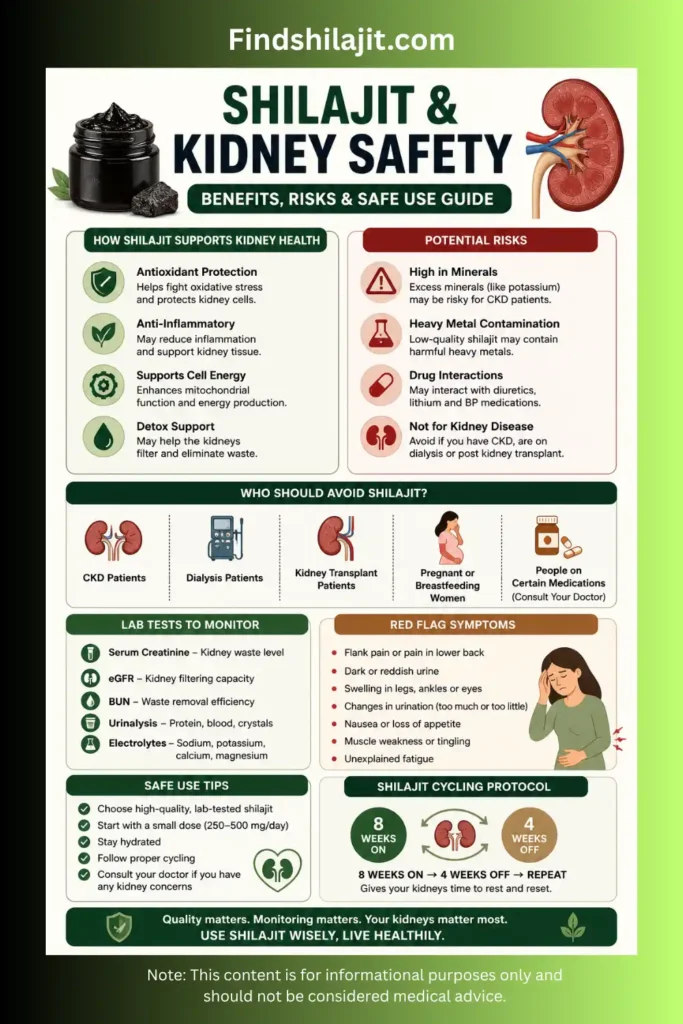
But if you have kidney disease, a history of kidney stones, or you are taking kidney-related medications — Shilajit can be risky. It may overload your kidneys with minerals, raise your potassium too high, or interact with your medicines.
The short answer: it depends entirely on your kidney health and the quality of the product you choose.
How Much Do We Actually Know? Human Research Is Still Limited
Most of what we know about Shilajit and kidney function comes from animal studies, not human trials. Rats given Shilajit before or during kidney stress have shown protective changes in blood markers and tissue samples. That’s genuinely useful information, but a rat’s kidneys aren’t a substitute for a controlled human study, and very few of those exist.
This doesn’t mean Shilajit is unsafe or that the traditional use is meaningless. It means the confident-sounding claims you’ll see across the internet, including on this page, are mostly extrapolated from early or indirect evidence. Treat anything specific enough to sound like a medical fact, dosage numbers especially, as a starting point for a conversation with your doctor, not a settled answer.
What Are Kidneys and Why Does Their Health Matter?
Kidneys are a pair of bean-shaped organs that form a vital part of the urinary system. They filter the blood to remove waste products, excess water, and toxins while maintaining fluid, electrolyte, and acid-base balance.
The kidneys also help regulate blood pressure and produce hormones that support red blood cell production and bone health.
Located on either side of the spine, these small yet powerful organs work continuously to keep the body functioning properly.
They act as the body’s natural filtration and control system, ensuring that harmful substances are removed and essential nutrients are retained. Without healthy kidneys, waste products can accumulate in the bloodstream, disrupting normal bodily functions.
Here’s what our kidneys do every single day:
- Filter waste and toxins from the blood
Just like a water filter removes dirt before you drink it, our kidneys clean our blood before it travels back into our bodies. - Balance fluids and electrolytes
They make sure we have the right amount of water, sodium, and potassium, similar to keeping a swimming pool’s chemicals balanced so the water stays safe. - Regulate blood pressure
When kidneys sense changes in our blood flow, they release signals to control pressure, almost like a smart thermostat that adjusts temperature automatically. - Produce hormones that support red blood cell production
These hormones tell our bone marrow to make red blood cells, which carry oxygen throughout our bodies.
Because kidneys are so important, anything we take, including natural supplements like Shilajit, can affect them if not taken in the right direction and right quantity.
Note: If you are taking any medications, it is not recommended to use shilajit without medical advice. Consult your doctor before using shilajit to ensure it is safe for you.
What Is Shilajit and How Does It Work?
Shilajit is a thick dark brown color, tar-like substance that naturally seeps out of mountain rocks, especially in the Himalayas and Altai.
It is formed over hundreds of years as plants and organic materials break down and get compressed inside the rocks.
Both shilajit from the Himalayas and Altai have different properties and percentages of fulvic and humic acids due to altitude and environmental differences.
Over time, heat and pressure transform this organic material into a mineral-rich resin. When collected, processed, and purified, it becomes what we know as pure Shilajit.
However, consuming raw or unpurified Shilajit may be harmful because it can contain heavy metals, contaminants, and other naturally occurring impurities that may pose risks to kidney health and overall long term health.
What makes it special is its unique blend of fulvic acid, humic acid, over 84 trace minerals, and natural antioxidants, nutrients that are not easy to get from regular food sources.
Once Shilajit enters our system, its key compound, fulvic acid, helps our cells absorb minerals better and supports the removal of toxins, like a delivery service that brings nutrients in and carries waste out.
This is why many people feel increased energy after using it; our cells simply work more efficiently.
The minerals and antioxidants in Shilajit also help lower inflammation and support the body’s natural repair process.
These actions indirectly support organs like our kidneys, which are constantly working to filter the blood and manage waste.
Potential Kidney Benefits of Shilajit
- Antioxidant protection — In one 2022 animal study, rats given Shilajit alongside chemotherapy drugs showed less kidney and liver damage than rats on chemotherapy alone, with blood markers for kidney stress returning closer to normal. It’s an animal study, not proof this happens in people, but it points to a real mechanism worth more research.
- Mineral support — Supplies trace minerals that play a role in normal kidney filtration.
- Anti-inflammatory effects — May reduce swelling and internal inflammation in kidney tissue.
- Improved mitochondrial function — May help kidney cells produce energy more efficiently.
Is Shilajit Bad for Kidneys?
No, but Shilajit can become a problem for our kidneys under certain conditions. The biggest concern is unsafe or unpurified Shilajit. You should know how to identify fake shilajit at home.
How to Spot Pure Shilajit Before You Buy
Since contaminated product is the biggest real risk here, it’s worth checking a few things before you buy anything:
- It should dissolve completely in warm water, leaving no grit, sludge, or residue at the bottom of the glass.
- It shouldn’t turn plasticky or shiny when heated. Real resin softens; synthetic or heavily cut product tends to behave more like tar or wax.
- It should be an actual resin, not just a fine powder with no texture. Powder-only products are harder to verify and more commonly diluted.
- Ask for a batch-specific lab report, not a generic one on the brand’s website. You want heavy metal testing tied to the batch you’re actually buying, not a report from a different production run.
Some low-quality products contain heavy metals like lead, arsenic, or mercury, which can build up in our kidneys. Over time, this may cause inflammation, stress on kidney tissues, and long-term damage.
Taking very high doses or using Shilajit when we already have kidney disease can also increase the risk.
Here is the Risk Summary
| Situation | Risk Level |
| Healthy person + pure Shilajit | Low risk |
| Kidney disease patient | High risk |
| Using a fake or contaminated product | Extremely high risk |
I suggest choosing purified, lab-tested Shilajit is essential to avoid harm.
Shilajit and Potassium: The Hidden Risk Nobody Talks About
Most people know that Shilajit contains minerals. But here is something many articles skip over, Shilajit is also rich in potassium.
For healthy people, potassium is a good thing. It helps our muscles, nerves, and heart work properly.
But here is where it gets serious.
When our kidneys are healthy, they filter out any extra potassium we don’t need. Think of it like a drain in a sink, extra water just flows away.
Now imagine that the drain is partially blocked. Suddenly, even a small amount of extra water causes a flood.
That is exactly what happens when someone with kidney disease takes Shilajit.
Because their kidneys cannot filter properly, the extra potassium from Shilajit starts to build up in their blood. Doctors call this condition hyperkalemia, which simply means dangerously high potassium levels in the blood.
Why Hyperkalemia Is Serious
Hyperkalemia is not just uncomfortable. It can cause:
- Muscle weakness — your legs and arms feel heavy and hard to move
- Irregular heartbeat — your heart starts skipping or racing unexpectedly
- In severe cases, cardiac arrest — this is a medical emergency
This is why doctors specifically warn people with Chronic Kidney Disease (CKD) especially those at Stage 3 or higher to avoid Shilajit without medical supervision.
Shilajit and High Blood Pressure: The Sodium Problem Too
Shilajit also contains sodium. For most healthy people, this is not a problem.
But for someone whose kidneys are already struggling, extra sodium can raise blood pressure further and high blood pressure is one of the leading causes of further kidney damage.
It becomes a dangerous cycle: Weak kidneys → struggle to clear sodium → blood pressure rises → kidneys get more damaged.
This is why Shilajit is not a supplement you can treat casually if you have any kidney condition.
Can Shilajit Interact with Kidney Medications?
This is one of the most important questions to ask — and almost nobody talks about it clearly.
Yes, Shilajit can interact with certain medications. And if you are on kidney-related treatment, this is something you absolutely need to know before taking it.
| Medication Type | Potential Interaction with Shilajit | Risk Level |
|---|---|---|
| Lithium | May affect how the body clears lithium, raising blood levels | High |
| Immunosuppressants | May reduce effectiveness | High |
| Diuretics (water pills) | May increase fluid/electrolyte loss | Medium |
| ACE inhibitors / ARBs | Combined with potassium risk = hyperkalemia concern | Medium |
| Anticoagulants | May alter clotting effect | Medium |
| Blood pressure medications | Combined with Shilajit’s own mild effect on blood pressure and fluid balance | Medium |
Shilajit and Lithium
Lithium is a medication used to treat mood conditions like bipolar disorder. It is also commonly prescribed to some kidney patients alongside other treatments.
Here is the problem: Shilajit can affect how the body absorbs and clears lithium. This means lithium can build up to higher-than-normal levels in your blood — which can cause toxicity.
Think of it like this. Imagine your medicine is a carefully measured teaspoon of salt in a glass of water. Shilajit can accidentally turn that into a tablespoon — even if you took the exact same dose of medicine.
Shilajit and Immunosuppressants (Transplant Patients)
As we already covered in the transplant section above, Shilajit can interfere with immunosuppressant drugs — the medicines that prevent the body from rejecting a transplanted kidney.
This interaction can weaken the protection those medicines provide, putting the new kidney at serious risk.
Shilajit and Diuretics
Diuretics are often called “water pills.” Doctors prescribe them to help the body release extra fluid — especially common in kidney disease and heart conditions.
Since Shilajit itself has mild diuretic properties, combining both may increase fluid loss more than expected. This can throw off the delicate balance of electrolytes in your body.
The Simple Rule
If you are on any regular medication, always tell your doctor before starting Shilajit.
This is not just general advice — it is especially critical for anyone on medications related to their kidneys, heart, or mood.
| Medication Type | Potential Interaction with Shilajit | Risk Level |
| Lithium | May raise lithium blood levels | High |
| Immunosuppressants | May reduce effectiveness | High |
| Diuretics (water pills) | May increase fluid/electrolyte loss | Medium |
| ACE inhibitors / ARBs | Combined with potassium risk = hyperkalemia concern | Medium |
Is Shilajit Good or Bad for Kidney Stones?
Shilajit doesn’t treat kidney stones, and it doesn’t automatically cause them either. But if you’ve had stones before, there are two things worth knowing.
First, Shilajit is mineral-dense, and some of those minerals overlap with what certain stone types are made of. If your stones were calcium-oxalate stones specifically, adding a concentrated mineral supplement isn’t something to do without checking with your doctor first.
Second, some early research points to a mild diuretic effect, which in theory could support urinary flow. That’s not strong enough evidence to call it protective. If you have a history of stones, get your doctor’s take before starting, and don’t treat Shilajit as a preventive measure on its own.
Shilajit for Kidney Disease Patients
If you have kidney conditions like CKD, high creatinine, or nephritis, Shilajit may not be safe. Diseased kidneys struggle to manage extra minerals and detox demands, which can make the condition worse.
Anyone with kidney disorders or sensitive kidneys should avoid Shilajit unless a doctor clearly approves it.
Shilajit and Chronic Kidney Disease (CKD): Is It Safe at Each Stage?
Not all kidney disease is the same. There is a big difference between someone with mildly reduced kidney function and someone whose kidneys are barely working.
Doctors measure kidney health using something called eGFR — which stands for estimated Glomerular Filtration Rate. It is simply a number that tells us how well the kidneys are filtering blood.
Think of eGFR like a car engine working at different percentages:
- Above 90% — running smoothly
- 60 to 90% — slightly reduced but manageable
- Below 60% — real problems starting
- Below 15% — near failure
Here is how Shilajit safety changes at each CKD stage:
| CKD Stage | eGFR Range | Kidney Function | Shilajit Safety |
| Stage 1 | 90 or above | Normal or high | Proceed with caution — doctor consultation advised |
| Stage 2 | 60 to 89 | Mildly reduced | Use only under medical supervision |
| Stage 3 | 30 to 59 | Moderately reduced | Not recommended without nephrologist approval |
| Stage 4 | 15 to 29 | Severely reduced | Avoid completely |
| Stage 5 | Below 15 | Kidney failure | Strictly contraindicated |
| Dialysis | N/A | Kidney function replaced by machine | Do not use |
What This Means in Simple Words
If your eGFR is below 60 — which is CKD Stage 3 or worse — your kidneys are already working at less than half their normal capacity.
Adding Shilajit’s mineral load, potassium content, and detox demands onto kidneys that are already struggling is like asking a person with a broken leg to run a marathon.
It is simply too much for them to handle.
Always check your eGFR with a simple blood test before considering Shilajit. Your doctor or nephrologist is the only person who should give you the green light.
Is Shilajit Safe for Kidney Transplant Patients?
No, Shilajit is not safe for kidney transplant patients without a doctor’s approval. It can interact with immunosuppressant medicines and put extra stress on the transplanted kidney.
This may trigger unwanted immune reactions and lead to serious health risks.
How to Take Shilajit Safely
- Check with your doctor first – especially if you have any health issues.
- Choose purified, third-party tested Shilajit – look for GMP, heavy metals tested, and Himalayan origin on the label.
- Start with a small dose – like a pea-sized amount of resin or the lowest recommended capsule dose.
- Avoid overdosing – never take more than 500 mg daily or your doctor suggests.
- Stay hydrated – drink enough water throughout the day.
- Don’t mix with many strong supplements – keep your stack simple unless a doctor guides you.
What Actually Happens to Your Kidneys After 6 Months of Daily Shilajit?
For healthy people using a pure product with good hydration — likely nothing harmful. Some animal studies even suggest fulvic acid may reduce oxidative stress in kidney tissue over time.
The real risk is for people with mild, undiagnosed kidney issues — which is more common than most people realise. Six months of daily mineral loading on already-stressed kidneys can quietly raise creatinine and blood pressure without obvious symptoms.
The single biggest factor is water intake. Shilajit’s compounds exit through urine. Without 2 to 3 litres of water daily, mineral concentration builds up and the kidneys work harder than they should.
Get a kidney panel before you start. Recheck at 2 months. Let your labs confirm what your body cannot feel.
Who Should Avoid Shilajit Completely
- People with kidney disease
- Those who already have kidney stones
- Kidney transplant patients
- Pregnant or nursing women
- Anyone with electrolyte imbalance disorders
- People with hemochromatosis or other iron overload conditions — Shilajit’s iron content can add to a problem your body is already struggling to manage
- Anyone with gout or existing high uric acid levels, since Shilajit may push uric acid higher
How Shilajit Affects Your Kidneys Differently Based on Your Age
After age 40, kidneys naturally lose about 1% of their filtering capacity every year. Most people never notice because there are no symptoms — but it is happening silently.
This matters because Shilajit delivers a concentrated mineral load that healthy young kidneys handle easily. Older kidneys have to work harder to process the same amount.
If you are under 35 with no kidney history — standard dosing is generally fine. If you are over 50 — start at half the recommended dose, get your creatinine and eGFR checked first, and shorten your cycles to 6 weeks instead of 8.
Age does not make Shilajit dangerous. It just means the same product needs a more careful approach.
Conclusion
We learnt that Shilajit can be helpful only when our kidneys are healthy, the product is purified, and we stick to safe doses.
However, it becomes risky if we use unprocessed or contaminated Shilajit, have kidney problems, or take more than needed.
Shilajit is a powerful supplement, not a harmless herb. It may support kidney function in healthy people, but for anyone with kidney issues, it can do more harm than good without medical advice.
Did this guide help? Please let us know in the comments what topic we should explore next: Shilajit and testosterone, or Shilajit for energy and stamina?
FAQs
Does Shilajit detox the kidneys?
It may support detox pathways, but it is not a kidney cleanse product.
Can I take Shilajit with high creatinine levels?
No, avoid unless prescribed by a nephrologist.
Is resin safer than capsules?
Resin is closer to its natural form but must still be purified and tested.
Disclaimer
This article is for informational purposes only. Please consult a licensed healthcare provider before starting any new supplement, especially if you are pregnant, breastfeeding, or on medication.
Reference:
Shilajit Enhances Chemotherapy and Protects the Liver and Kidneys
Shilajit: A Natural Phytocomplex with Potential Procognitive Activity
Effects of Shilajit on 5-FU-Induced Kidney Damage in Rats
The Efficacy of Shilajit in Urinary Disorders
Why Your Doctor Monitors Kidney Health on Shilajit: Important Next Steps
Shilajit for Kidney Patients: Benefits and Risks
A Quick Introduction to Shilajit
Heavy metals in Shilajit — 2024 Review
National Kidney Foundation — Herbal Supplements & CKD
Shilajit Safety Review — Journal of Ethnopharmacology 2021
NIH — Kidney Function Tests Explained (eGFR & Creatinine)

Reviewed by: Dr. Aarya Mehta, MD (India)
Internal medicine physician with an interest in health education, nutrition, metabolic health, dietary supplements, herbal ingredients, and responsible supplement safety information.
View full profile →Medical review date: December 31, 2025