 By
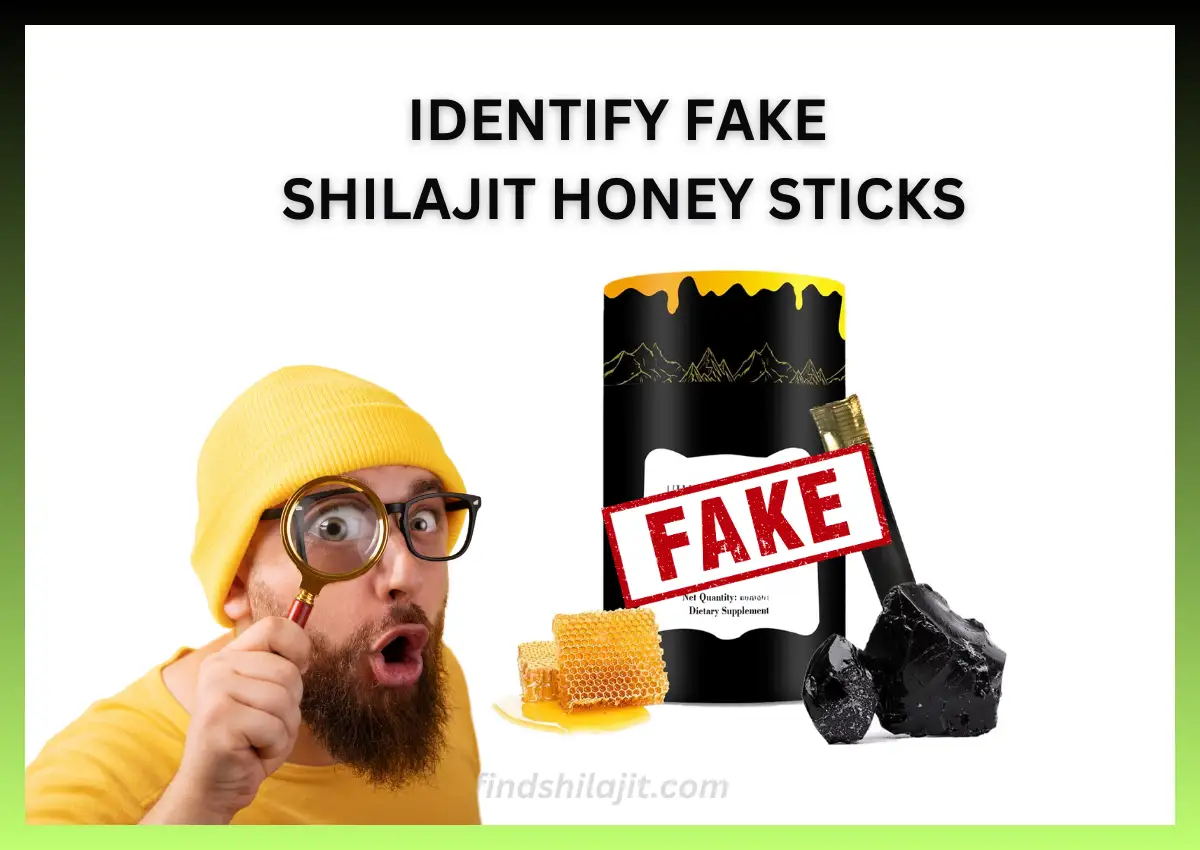
ByLearning how to find fake shilajit honey sticks has become more important than ever as the demand for Shilajit continues to grow worldwide.
In the past few years, Shilajit and Shilajit honey sticks have gone from being a hidden gem in Ayurveda to a rising star in the global wellness market.
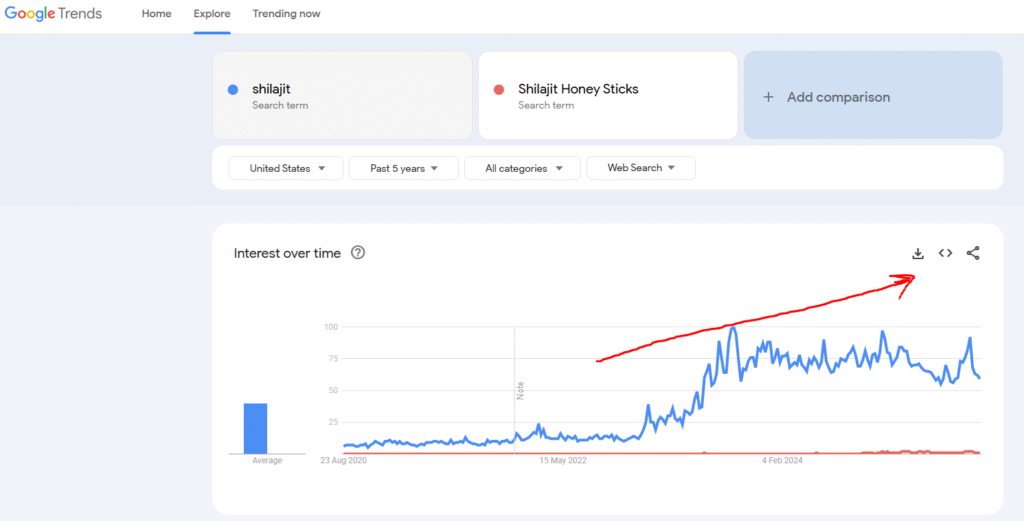
According to Google Trends, interest in Shilajit has grown sharply in the U.S. since late 2022, showing how more people are now turning to natural remedies for energy, stamina, and focus.
Shilajit honey sticks are especially gaining popularity because they’re portable, tasty, and an easy way to enjoy the benefits of this ancient resin.
But with rising demand comes a major problem: fake and low-quality Shilajit products. Many brands cut corners by adding fillers, artificial flavors, or low-grade ingredients that reduce the real effectiveness of Shilajit.
In this post, I’ll help you spot the clear signs of fake Shilajit honey sticks, so you can avoid low-quality products and choose one that delivers real benefits.
Why Shilajit Authenticity Matters
When it comes to using Shilajit, purity isn’t just a marketing term; it’s the difference between real health benefits and possible harm.
Shilajit is a natural resin that looks like tar, formed over centuries in the mountains, packed with minerals and fulvic acid.
Shilajit is not tasty; it is bitter and has a harsh smell in real shilajit, which is why many brands now mix it with gummies, honeystick, and so on. That is why many people are confused about what to try: shilajit resin vs gummies vs capsules vs powder
When raw shilajit is blended into honey sticks, it becomes an easy and tasty way to get daily energy support. But if the product is fake, you’re not only wasting money, you’re also risking your health.
What Is Ozokerite and Why It’s Being Sold as Shilajit?
One of the most common adulterants hiding inside fake Shilajit products is a substance called Ozokerite and most buyers have never heard of it.
Ozokerite is a naturally occurring mineral wax derived from petroleum deposits. It is dark brown to black in color, slightly shiny, and has a faintly earthy smell which makes it a visually convincing stand-in for real Shilajit resin.
In the cosmetics industry, it is used in lip balms, shoe polish, and electrical insulation. It has no place in a health supplement.
Why sellers use it: Ozokerite is cheap, widely available, and looks almost identical to raw Shilajit at first glance. It has no real health benefits, but it passes visual inspection easily and can be processed into honey sticks with little difficulty.
How to detect it: The flame test is your best home defense against Ozokerite. Real Shilajit does not catch fire; it bubbles and chars slowly. Ozokerite, being petroleum-derived, ignites quickly and produces thick black smoke and a strong chemical or plastic-like smell.
Health Benefits of Real Shilajit Honey Sticks
- Boost energy and stamina naturally without a crash over 30
- Helps to reduce your body weight and manage your metabolism
- Support brain function, memory, and focus
- Strengthen immunity with trace minerals and antioxidants
- Aid muscle recovery and reduce fatigue
- Improve overall vitality by balancing cellular energy
- Help in mood and libido
- Reduce metal stress and make you feel calm
I’ve personally noticed how consistent use of genuine sticks helps maintain steady energy through the day without needing extra coffee.
Safe Consumption Dosage for Shilajit Honey Sticks
Knowing how much to take is just as important as choosing an authentic product. Shilajit is potent, and more is not always better.
- Beginners / First-time users: 150–250 mg/day
- Regular adult users: 250–500 mg/day
- Active adults / athletes: Up to 500 mg/day
- Seniors or sensitive individuals: Start with 100–150 mg/day
Always check the mg of Shilajit per stick listed on the supplement facts panel dosing varies widely by brand.
Best Time to Take: Morning on an empty stomach or 30 minutes before a meal is widely recommended for maximum absorption.
Avoid taking it late at night, as its energy-supporting properties may interfere with sleep for some people.
How Long Before You See Results: Real Shilajit works gradually. Most users report noticeable improvements in energy and focus after 2–4 weeks of consistent daily use.
What are the Risks of Fake Shilajit Honey Stick
The biggest problem with fake honey sticks is the unknown or hidden ingredients. Some are just flavored sugar syrup with zero Shilajit.
Others may contain harmful fillers, low-quality resin, or even synthetic chemicals. Instead of feeling energetic, you may end up with stomach issues, headaches, or sudden sugar spikes.
Long-term Health Implications
Using counterfeit products regularly can quietly harm your body. Over time, these low-grade additives may stress your liver, weaken your digestion, and reduce your body’s natural ability to absorb real nutrients. Instead of building vitality, fake products slowly drain it.
Side Effects of Fake Shilajit Honey Sticks
Low-quality or contaminated Shilajit honey sticks may trigger several unwanted side effects, especially when they contain heavy metals, artificial additives, or petroleum-based fillers. Some users report nausea, headaches, bloating, stomach cramps, skin irritation, or unusual fatigue after consuming counterfeit products.
In more serious cases, contaminated Shilajit may stress the liver or kidneys over time due to hidden heavy metals such as lead, mercury, or arsenic. If you notice dizziness, digestive discomfort, rapid heartbeat, or chemical aftertastes after taking a product, discontinue use immediately and verify its authenticity through lab testing.
How To Find Fake Shilajit Honey Stick
Spot Fake Shilajit Honey Sticks Before Buying
Demand Transparent Lab Testing and a Batch-Specific COA
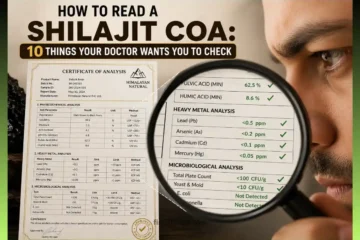
Before buying any Shilajit honey stick, always check whether the brand provides a recent Certificate of Analysis (COA) from an independent third-party laboratory.
Genuine companies usually place a QR code on the box or provide downloadable reports directly on their website.
Carefully review the report instead of blindly trusting “lab tested” claims. The COA should clearly show heavy metal testing, microbial safety results, and fulvic acid analysis. If the report is missing, outdated, cropped, or impossible to verify, treat it as a serious warning sign.
Verify Source Transparency and High-Altitude Origin
Authentic Shilajit is traditionally sourced from high-altitude mountain regions such as the Himalayas, Kashmir, Ladakh, Altai, or Tibet. Reliable brands openly explain where their resin comes from, how it is harvested, and how it is purified before use.
Be cautious of products that use vague phrases like “mountain sourced” or “premium Himalayan blend” without any real sourcing details. Genuine brands are usually proud of their origin because high-altitude Shilajit is more mineral-rich and less likely to contain contaminants.
Check Shilajit Content, Honey Quality, and Ratio
A trustworthy honey stick clearly mentions the exact amount of Shilajit per stick, usually measured in milligrams. It should also specify whether the honey used is raw, organic, or unfiltered instead of artificial syrup blends.
Read the ingredient list carefully. If sugar syrup, artificial flavors, preservatives, or coloring agents appear before honey or Shilajit, the product may be heavily diluted. A good honey stick should balance natural honey sweetness with the earthy depth of real resin.
Evaluate Price and Value
Real Shilajit is difficult to harvest and purify, which naturally increases its cost. Extremely cheap honey sticks are often made with low-grade resin, synthetic fillers, or almost no Shilajit at all.
Instead of focusing only on price, compare the amount of Shilajit per stick, lab testing transparency, and ingredient quality. Paying slightly more for verified authenticity is usually safer than buying suspiciously cheap products that may be ineffective or contaminated.
Avoid Unrealistic Claims
Authentic Shilajit works gradually by supporting cellular energy, recovery, and mineral absorption over time. It is not an instant stimulant or miracle cure that transforms health overnight.
Avoid products claiming “instant testosterone boost,” “overnight muscle gain,” “permanent cure,” or “immediate superhuman energy.” These exaggerated promises are commonly used by low-quality brands trying to attract buyers through unrealistic marketing.
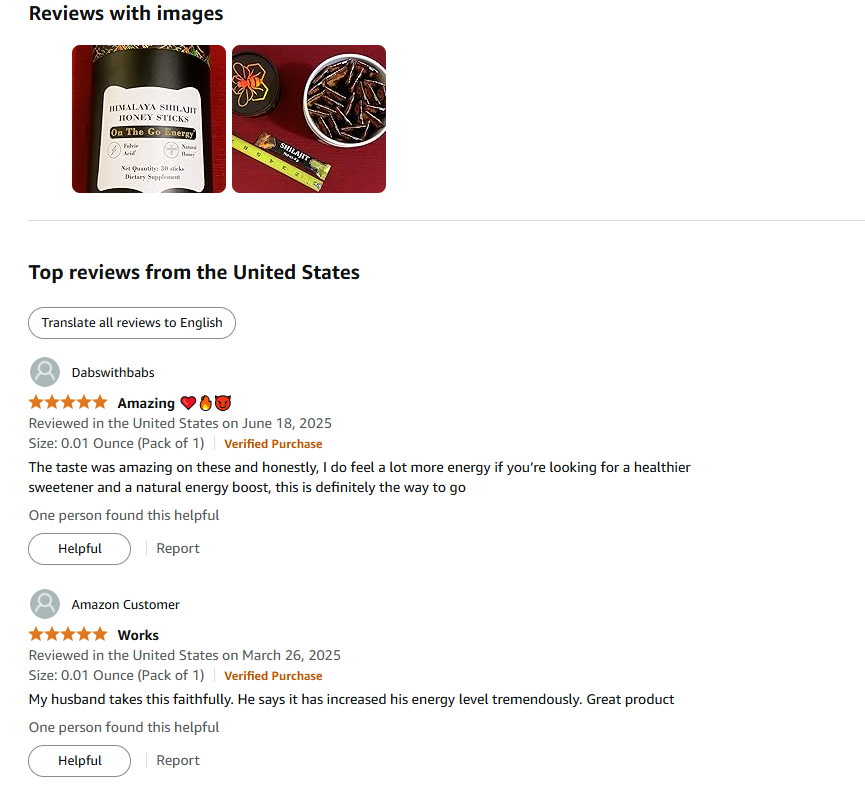
Analyze Reviews for Authentic Signals
What others say can reveal a lot about product quality. Reviews mentioning weak effects, artificial taste, or side effects are warning signs, while genuine products usually have balanced feedback that feels natural instead of overly promotional.
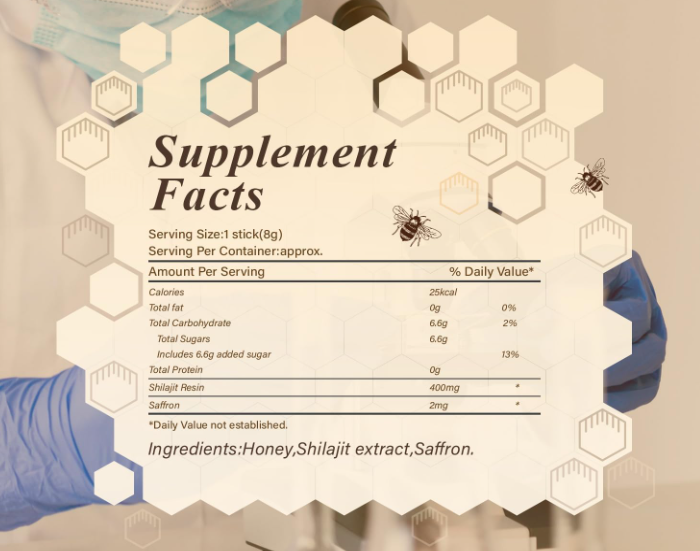
Check Supplement Facts
Reputable brands clearly show supplement facts so you know what you’re consuming. If a Shilajit honey stick brand doesn’t display this information, consider it a red flag and avoid it.
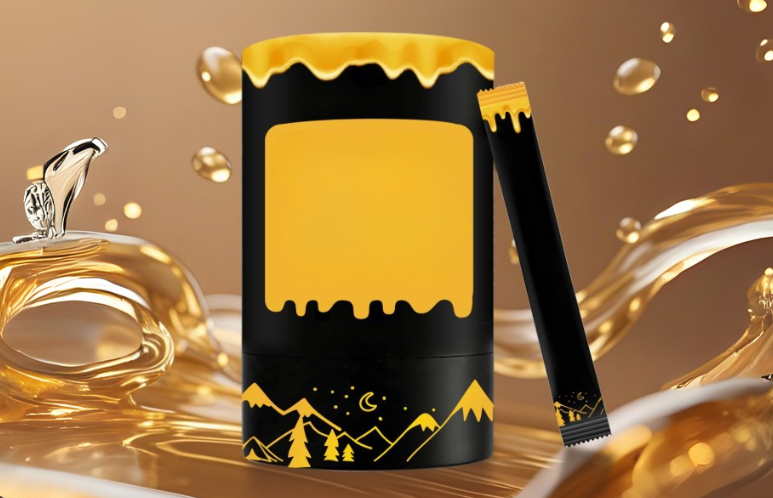
Check Product Label & Packaging
Always look for clear labeling on Shilajit honey sticks. A genuine brand will mention its name, ingredients, and the total number of sticks in each box. If the product comes with blank or unclear packaging, it’s a strong sign of fraud; avoid buying it.
Government Approval & Trust Signals
Check if the Shilajit honey stick is approved by regulatory bodies like the FDA, or if the brand displays certifications such as GMP (Good Manufacturing Practice). These signals help ensure safety and authenticity.
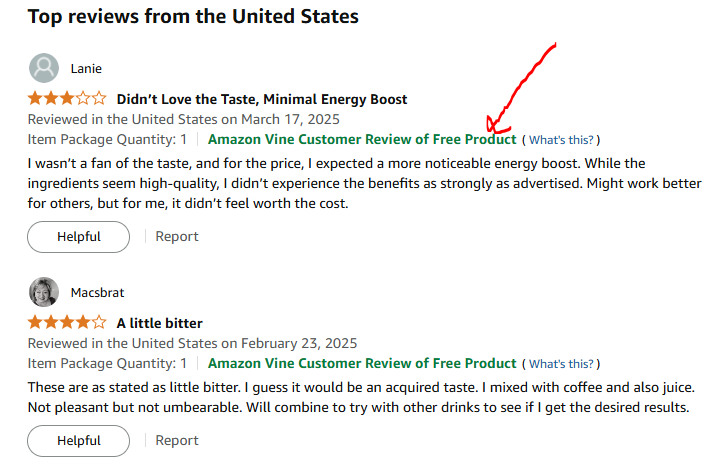
Check for Amazon Vine Reviews
On Amazon, some reviews come from customers who received free products through the Vine program. While these reviews can be helpful, they may also be biased. Always check if the reviewer is a Verified Purchaser or marked as a Vine Customer Review of Free Product before trusting the feedback.
At-Home Purity Tests for Shilajit Honey Sticks
Water Solubility Test
Take a small portion of the darker Shilajit-rich material from the honey stick and place it into warm filtered water. Let it sit for several minutes without aggressively stirring so you can observe how it naturally dissolves.
Pure Shilajit gradually blends into the water, creating a golden-brown to reddish-black liquid with very little residue. Fake products often leave gritty particles, cloudy sediment, oily films, or floating clumps that suggest fillers or synthetic additives.
Flame Test
Place a tiny amount of the Shilajit material onto a metal spoon and carefully expose it to a lighter flame in a well-ventilated area. Use only a very small sample because honey itself can burn.
Authentic Shilajit usually bubbles, softens, and chars slowly while releasing an earthy mineral-like aroma. Fake or petroleum-based adulterants such as Ozokerite tend to ignite quickly, produce thick black smoke, and smell strongly of plastic, fuel, or chemicals.
Alcohol Solubility Test
Add a small sample into rubbing alcohol or high-proof alcohol and gently stir it. This test helps detect artificial binders, dyes, and synthetic additives commonly used in counterfeit products.
Pure Shilajit does not dissolve easily in alcohol because of its natural bioactive structure. Fake versions often break apart quickly, discolor the liquid, or dissolve unnaturally fast due to chemical fillers.
Texture and Pliability Test
Observe how the material reacts to temperature changes. At room temperature, authentic Shilajit should feel sticky, resin-like, and slightly elastic rather than dry or powdery.
Place a small amount in the refrigerator for a few minutes, then warm it between your fingers. Genuine Shilajit hardens when cold and softens again with heat, while fake products often remain waxy, crumbly, or unnaturally smooth.
Taste and Smell Test
Taste a very tiny amount carefully and focus on the aftertaste rather than just the honey sweetness. Real Shilajit has a deep earthy profile with slightly bitter, smoky, mineral-like notes underneath the honey.
Fake products usually taste overly sweet, candy-like, or artificially flavored with almost no earthy depth. Chemical smells, perfume-like odors, or a burnt-plastic scent are major warning signs that the resin quality may be poor or adulterated.
At-Lab Purity Tests
Home tests are useful for basic screening, but laboratory verification remains the most reliable way to confirm authenticity and safety. A proper third-party COA can reveal contamination issues that are impossible to detect through taste or appearance alone.
Real vs Fake Shilajit Honey Sticks
| Feature | Real Shilajit Honey Stick | Fake Shilajit Honey Stick |
| Taste | Earthy, slightly bitter, smoky undertone | Overly sweet or artificial |
| Smell | Mineral-like, natural resin aroma | Chemical or perfume-like smell |
| Water Test | Dissolves smoothly with little residue | Leaves clumps, oil, or sediment |
| Flame Test | Bubbles slowly without catching fire | Burns quickly with black smoke |
| Texture | Sticky and resin-like | Waxy, gritty, or powdery |
| Fulvic Acid Claims | Realistic percentages with testing | Unrealistically high percentages |
| Packaging | COA, batch number, certifications | Generic or incomplete labeling |
| Effects | Gradual energy and recovery support | Sugar rush or no noticeable effects |
Heavy Metal Safety Reference Table for Shilajit
A trustworthy COA should include a heavy metals panel showing exact ppm values instead of vague statements like “within safe limits.” The safest reports use ICP-MS testing, which is considered the gold standard for trace metal analysis.
- Lead (Pb): Less than 10 ppm
- Mercury (Hg): Less than 0.5 ppm
- Arsenic (As): Less than 10 ppm
- Cadmium (Cd): Less than 0.3 ppm
Always verify that the laboratory is accredited under ISO/IEC 17025 or a similar international testing standard. If a company refuses to share full reports or hides numerical values, the product should not be trusted.
Fulvic Acid Benchmarks
Fulvic acid is one of the main active compounds responsible for many of Shilajit’s benefits. Understanding realistic percentages helps you avoid misleading marketing claims commonly used by fake or low-quality brands.
Raw or crude resin generally contains around 15–40% fulvic acid naturally. Purified resin extracts usually range from 50–85%, while standardized powders often fall between 40–70% depending on the extraction method.
Honey sticks contain diluted Shilajit because of the honey base, so realistic fulvic acid levels are usually much lower, often around 5–20% depending on the amount of resin used per stick. Any honey stick claiming “90% fulvic acid” without explaining the testing method should be viewed with skepticism.
The COA should ideally mention HPLC testing for fulvic acid analysis. Brands that advertise extremely high percentages without a verified method are often using inflated or unscientific numbers for marketing purposes.
What to Do If Your Shilajit Honey Sticks Fail a Test
Step 1: Stop Using the Product
Do not continue consuming a product that has failed a home test.
Step 2: Request a Refund
Amazon purchases: Use “Return or Replace Items.”
Brand website purchases: Contact customer support directly.
Step 3: Report the Product
India (FSSAI)
USA (FDA MedWatch)
Step 4: Get Lab Verification
Independent labs can test supplement samples for heavy metals and authenticity.
Conclusion
As fake supplements continue flooding online marketplaces, learning how to identify fake Shilajit honey sticks is becoming essential for protecting both your health and your money.
Authentic products should pass basic purity tests, provide transparent lab verification, and contain realistic fulvic acid levels instead of exaggerated marketing promises.
Take time to verify sourcing, test results, ingredient quality, and customer feedback before buying.
A genuine Shilajit product supports long-term energy, focus, and recovery naturally, while counterfeit products may expose you to unnecessary health risks and contamination.
Also Read: How to Find Fake Shilajit Resin
Disclaimer
This article is for informational purposes only. Please consult a licensed healthcare provider before starting any new supplement, especially if you are pregnant, breastfeeding, or on medication.
References
1. BMC Chemistry / PubMed Central (2025) — Thallium quantification in commercial shilajit supplements: pmc.ncbi.nlm.nih.gov/articles/PMC11743217/
2. Hussain et al. (2024) — Heavy metals and humic substances in shilajit: toxicity review and detoxification mechanisms. Environmental Science and Pollution Research (ResearchGate): researchgate.net/publication/378402811
3. ResearchGate — Heavy Metal Profile of Shilajit from Gilgit and Chellas, Pakistan: researchgate.net/publication/305730388
4. Contract Laboratory — Shilajit Purity Testing: COA standards, USP <2232> heavy metal limits, ISO 17025 requirements: contractlaboratory.com/shilajit-purity-testing/
5. U.S. Department of Defense OPSS — Supplement safety warning, shilajit verification guidance: hprc-online.org/nutrition/opss
6. Wellbeing Nutrition — Shilajit Purity Lab Testing Guide (fulvic acid %, ISO 17025, COA guidance): wellbeingnutrition.com/blogs/gut-detox-cleanse/shilajit-purity-your-complete-guide-to-lab-testing

Reviewed by: Dr. Natha Thomas, PhD (USA)
Nutrition and supplement research professional interested in nutritional science, dietary supplements, nutrient bioavailability, scientific literature, and how research findings are communicated to consumers.
View full profile →Medical review date: September 23, 2025