 By
ByFriends, Shilajit is often called “mountain’s black gold,” but have you ever wondered how this powerful natural substance is actually extracted? Found deep in the rocks of the Himalayas, raw Shilajit is not ready to consume in its natural form.
It goes through a careful and multi-step extraction process to become safe, pure, and effective.
Understanding the Shilajit extraction process is important because it directly impacts its quality, purity, and health benefits.
In this guide, we’ll break down how Shilajit is collected, purified, and transformed into the final product you see in resin, capsules, or gummies.
What Is Raw Shilajit?
Raw Shilajit is a naturally occurring, mineral-rich substance that forms over centuries from the slow decomposition of plant material and organic matter trapped between mountain rocks.
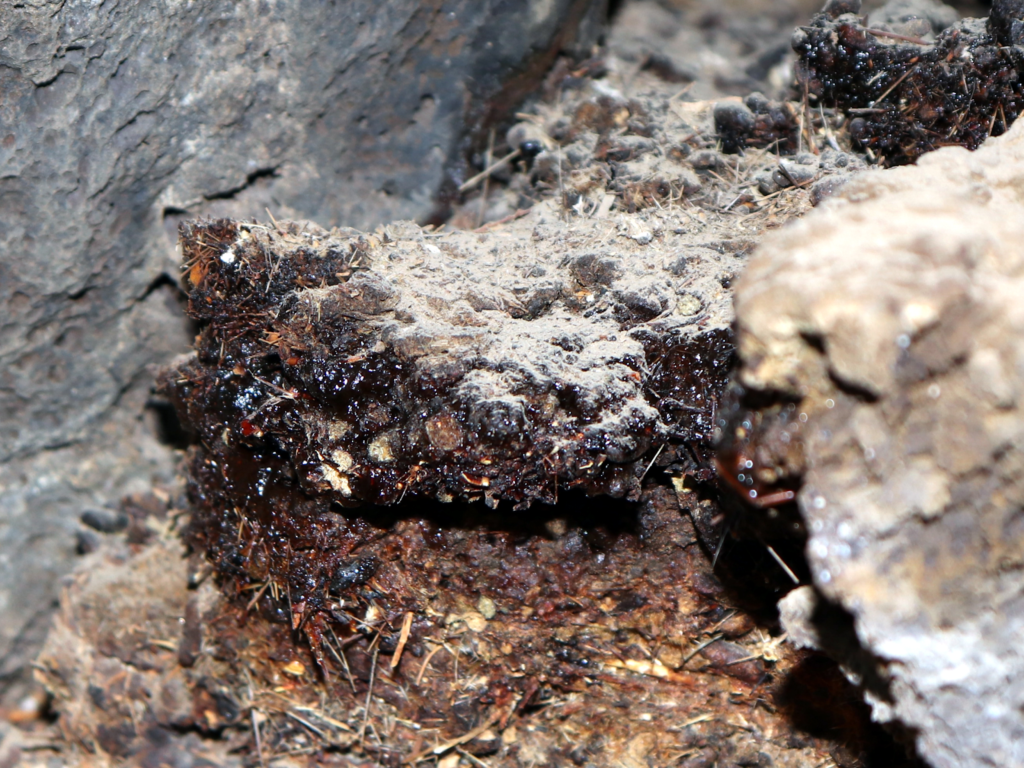
It is commonly found in the Himalayas, Altai, and other high-altitude regions.
In its raw form, Shilajit looks like a sticky, tar-like substance that oozes out of rock crevices during warm temperatures.
However, this raw form is not pure. You can’t eat directly. It often contains impurities like sand, dirt, and even heavy metals, which make it unsafe for direct consumption.
Why Shilajit Needs Purification?
Raw Shilajit cannot be consumed directly because it contains unwanted contaminants. The extraction and purification process is essential to remove these harmful substances and make it safe for human use.
This process helps:
- Remove dirt, sand, and toxins
- Eliminate heavy metals and impurities
- Maintain and standardize the fulvic acid content
- Improve overall safety and effectiveness
- Improve the taste of Shilajit
Without proper extraction, Shilajit may do more harm than good.
What is the Shilajit Extraction Process?
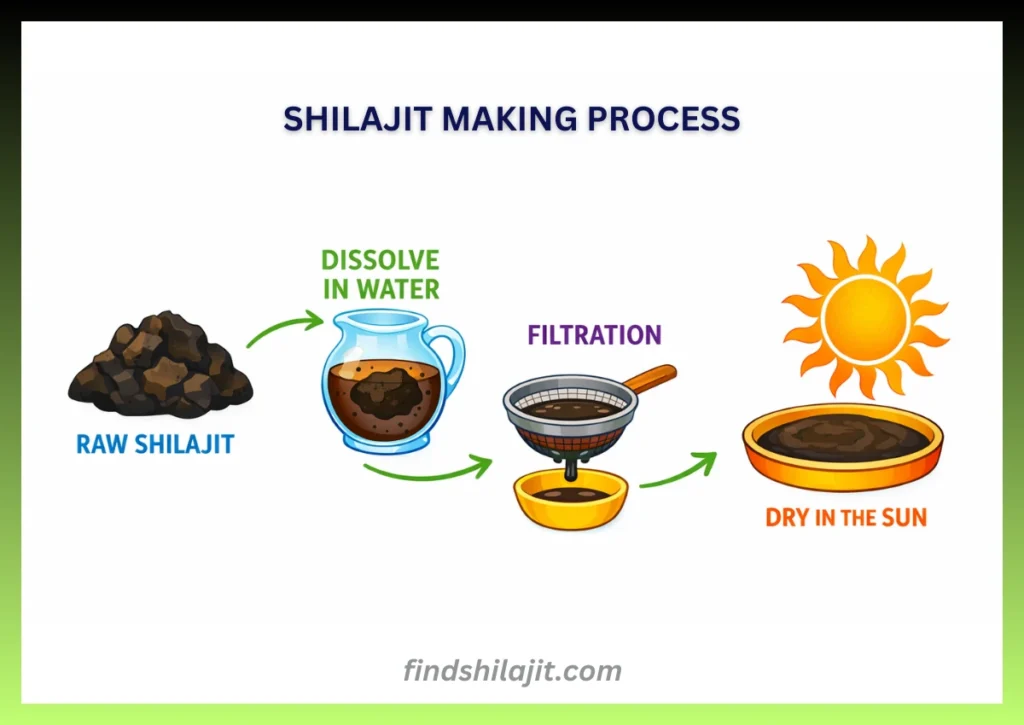
The journey of Shilajit is like a mountain-born secret slowly refined into a powerful natural supplement. As Raw Shilajit is not directly consumable, it goes through a careful multi-step purification process to make it safe, effective, and rich in nutrients.
1. Collection from High-Altitude Mountains
Shilajit is naturally found in high mountain regions like the Himalayas and Altai ranges, typically at altitudes of 12,000 to 18,000 feet.
During the summer months (May to July), the heat softens the resin, causing it to ooze out from cracks in rocks. Skilled local collectors manually gather this dark, sticky substance or extract it from rock surfaces.
2. Initial Cleaning & Crushing
The collected raw material contains impurities like sand, rocks, and plant residue.
It is first cleaned manually to remove visible debris, then crushed into smaller pieces. This step prepares the material for proper extraction and ensures better dissolution in the next stage.
3. Dissolution & Soaking
The crushed Shilajit is soaked in purified water.
- Soaking duration: 24–48 hours
- Purpose:
- Nutrients like fulvic acid dissolve into water
- Heavy particles like sand and stones settle at the bottom
This step separates the “useful essence” from the unwanted bulk.
4. Multi-Stage Filtration
Once dissolved, the liquid undergoes repeated filtration to remove even the finest impurities.
- Sedimentation allows heavy metals and particles to sink
- The upper liquid layer is filtered multiple times using:
- Cotton cloth (traditional)
- Advanced filters (modern methods)
This ensures a clean, grit-free extract.
5. Purification (Shodhana Process)
This is the most critical stage where safety and potency are ensured.
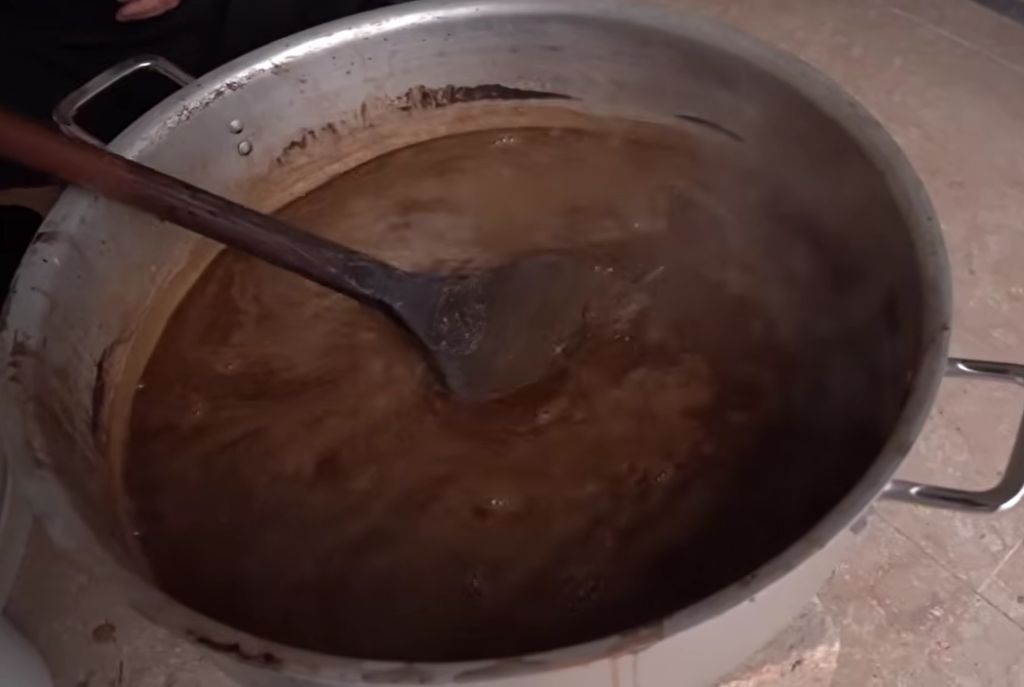
There are two main approaches:
- Traditional Ayurvedic Method (Shodhana)
Uses natural herbs and slow purification techniques to detoxify Shilajit while preserving its natural balance. - Modern Scientific Methods
Use controlled lab environments and advanced filtration systems for consistent quality and safety.
Both methods aim to remove toxins like heavy metals while retaining essential minerals and bioactive compounds.
6. Evaporation & Concentration
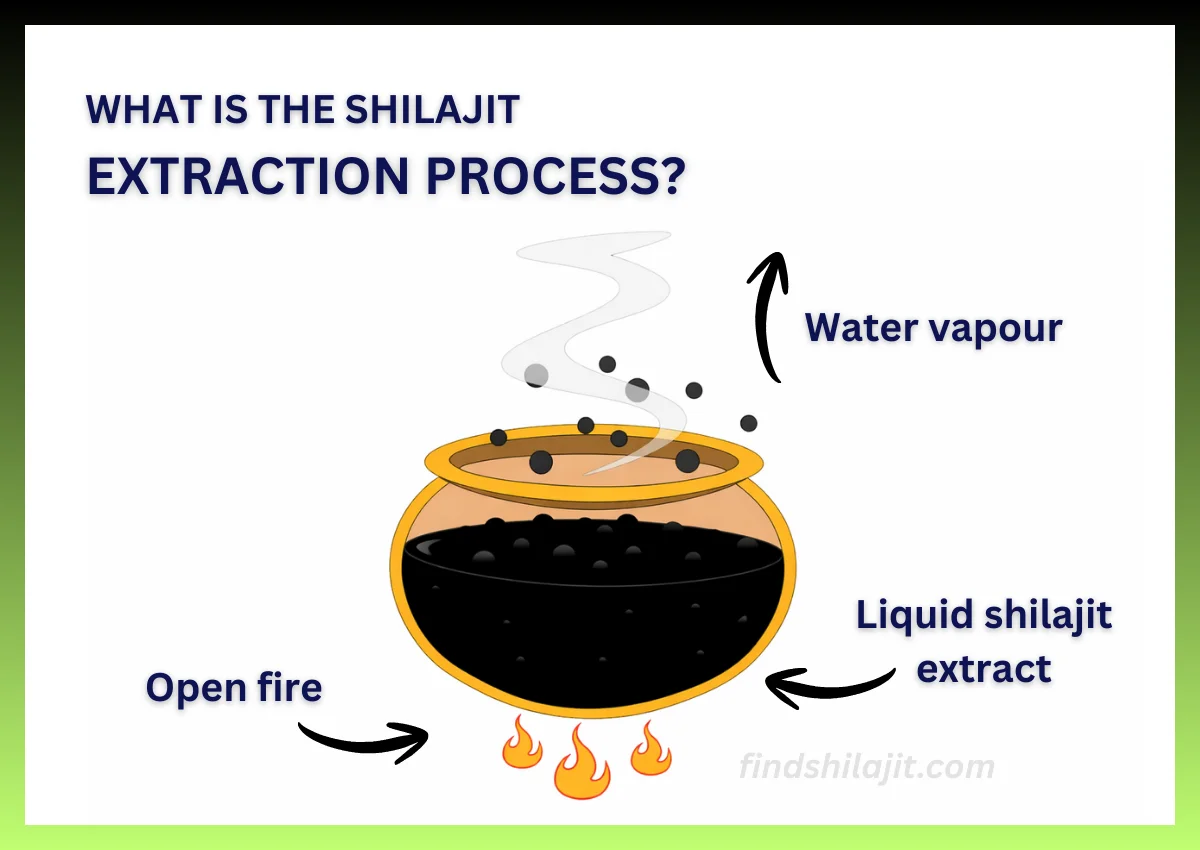
After purification, the liquid extract is concentrated by removing excess water.
Two methods are commonly used:
- Suryatapi (Sun Drying)
Slow evaporation under sunlight helps preserve heat-sensitive nutrients - Agnitapi (Controlled Heat)
Gentle heating speeds up the process without damaging compounds
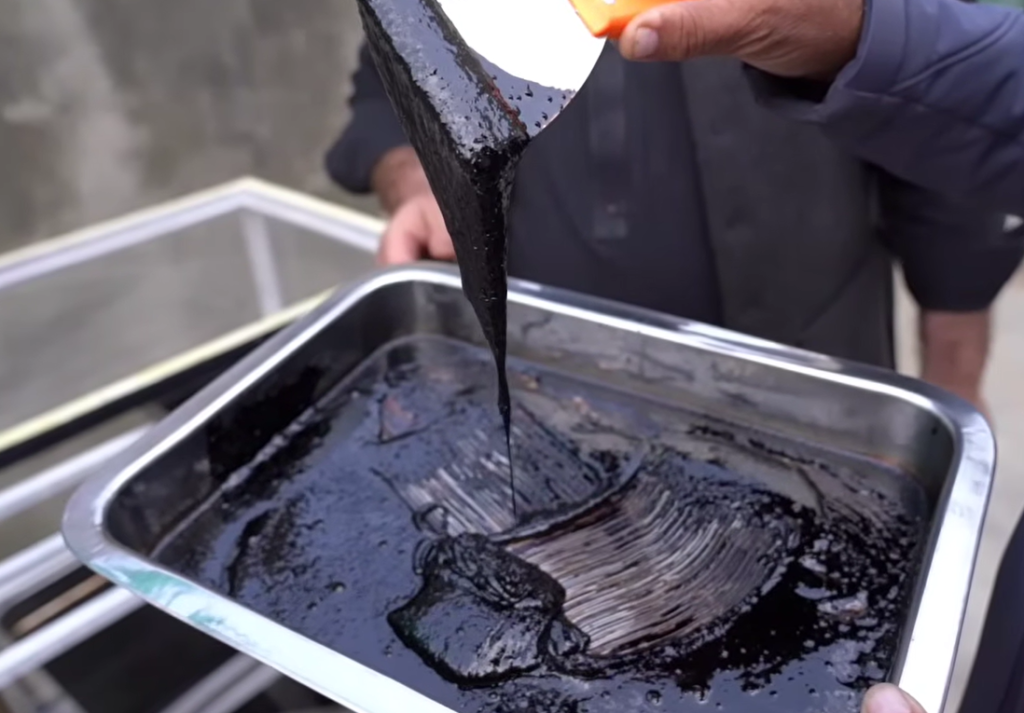
As water evaporates, the extract thickens into the classic blackish-brown Shilajit resin.
7. Final Processing & Form
Once the moisture level drops (around 20%), Shilajit takes its final form:
- Sticky resin (most potent form)
- Solid chunks
- Powder (further processed)
8. Quality Testing & Safety
Before reaching consumers, high-quality Shilajit is lab-tested for:
- Heavy metals (lead, mercury, arsenic)
- Microbial contamination
- Purity and potency
This ensures the product is safe and meets international standards.
What Does Shilajit Taste Like?
Shilajit has a strong, earthy, and slightly bitter taste that reflects its mineral-rich nature.
- Flavor like:
- Earthy
- Smoky
- Bitter
- Slightly salty
Many people compare it to a mix of herbal resin + mineral-rich soil. Because of its intense taste, it is usually consumed with warm water, milk, or honey to make it more palatable.
How Is Shilajit Capsule Made?
Shilajit capsules are designed for people who want convenience without the strong taste.
The process starts with purified Shilajit resin, which is first dried and converted into a fine powder. This powder is then standardized to ensure consistent levels of key compounds like fulvic acid.
After that:
- The powder is carefully measured into precise doses
- It is filled into vegetarian or gelatin capsules
- Capsules are sealed and tested for quality and safety
Capsules offer accurate dosage, easy consumption, and no bitterness, making them ideal for daily use.
How Is Shilajit Resin Made?
Shilajit resin is the purest and most traditional form.
After extraction from mountains, the raw Shilajit goes through purification (Shodhana), filtration, and slow evaporation. As the water content reduces, it thickens into a sticky, blackish-brown substance.
Key points:
- No major processing or additives
- Maintains maximum natural nutrients
- Rich in fulvic acid and trace minerals
This form is considered the most potent, but it has a strong taste and requires proper dosing.
How Are Shilajit Gummies Made?
Shilajit gummies are a modern, tasty alternative for those who dislike the natural flavor.
The process involves:
- Mixing purified Shilajit extract with natural sweeteners
- Adding fruit flavors for better taste
- Combining with a gelling agent like pectin or gelatin
- Molding into chewable gummy shapes
These gummies are then cooled, packed, and tested.
They are easy to consume and flavorful, but may contain added sugars and slightly lower potency compared to resin.
How Is Shilajit Honey Stick Made?
Shilajit honey sticks combine natural sweetness with herbal power.
In this process:
- Purified Shilajit extract is blended with raw or processed honey
- The mixture is stirred until evenly infused
- It is filled into small, single-use stick packs
These sticks are convenient and portable, making them perfect for on-the-go energy and immunity support.
The honey helps balance the bitter taste while also adding its own health benefits.
How Is Shilajit Drink Made?
Shilajit drinks are created for quick absorption and modern lifestyle use.
The process includes:
- Dissolving purified Shilajit extract in water or herbal liquids
- Adding ingredients like honey, lemon, or herbs for taste
- Filtering and blending for a smooth consistency
- Bottling under hygienic conditions
Some drinks are ready-to-consume, while others come as concentrates.
They are ideal for people who want fast energy, hydration, and easy intake without preparation.
FAQ
Is Shilajit made from cow urine?
No, Shilajit is not made from cow urine. It is a natural resin formed from plant matter in mountain rocks over centuries.
Is Shilajit an herb?
No, Shilajit is not an herb. It is a mineral-rich natural substance containing fulvic acid and trace minerals.
Is it safe to take Shilajit daily?
Yes, purified Shilajit is generally safe when taken in the right dosage. However, it’s important to use high-quality, tested products and consult a doctor if needed.
Who should not take Shilajit?
People with certain health conditions or those who are pregnant should avoid it. Always consult a healthcare professional before starting regular use.

Reviewed by: Dr. Natha Thomas, PhD (USA)
Clinical nutrition researcher focused on fulvic-rich supplements and nutrient bioavailability.
Reviewed & Approved on: April 4, 2026
Disclaimer
This article is for informational purposes only. Please consult a licensed healthcare provider before starting any new supplement, especially if you are pregnant, breastfeeding, or on medication.
Also Read:
Is BetterAlt Shilajit Legit? Real Customer Reviews
Is Xara Shilajit Legit? Real Customer Reviews
References:
Shilajit: A Natural Phytocomplex with Potential Procognitive Activity