By
ByHistory and Formation of Shilajit
Shilajit is a natural substance that people have used for health for a very long time. It is special because of where it comes from and how it forms over many years.
It slowly develops in mountain rocks from old plants and natural materials. When we understand its origin and history, it becomes clear why people across many generations have respected and trusted Shilajit so far.
Meaning and Origin of the Name Shilajit
The word Shilajit comes from the Indian Sanskrit language. Basically It is made from two words: Shila, meaning rock or mountain, and Jit, meaning conqueror.
Together, the name means rock conqueror or destroyer of weakness. This reflects the ancient belief that shilajit helped people stay strong and resilient in difficult mountain environments.
What Is Shilajit
Shilajit is a sticky, resin-like substance that naturally seeps out of mountain rocks in high-altitude regions.
It is usually dark brown or black and it becomes soft when warm. Shilajit is not a plant or a mineral alone it is a mix of herbs in the mountain.
It is a natural compound formed from ancient plant matter, microorganisms, and minerals over a very long period of time.
Where Shilajit Is Found
Shilajit is found only in specific mountain regions around the world. These include the Himalayas, the Altai Mountains, the Caucasus Mountains, and parts of Central Asia.

These areas share similar conditions such as high altitude, strong temperature changes, and rich ancient plant life, all of which are necessary for shilajit to form. But not all shilajit is the same, its potency varies based on geographical reason.
Types of Shilajit Found in Different Regions
Shilajit varies slightly depending on where it is found. Himalayan shilajit is the most widely known and studied.
Altai shilajit is often higher in trace minerals due to the region’s geology. Caucasus shilajit has a long history of local use.
While location affects mineral content and texture, overall shilajit quality depends more on purity and proper processing than on region alone.
Environmental Conditions Required for Shilajit Formation
Friends, Shilajit forms only under rare natural conditions. It is usually found at altitudes between 1,000 and 5,000 meters.
Regional seasonal cycles of freezing and warming help break down trapped plant matter.
Sunlight, snow, and long-term rock pressure all contribute to the slow transformation process. These conditions cannot be recreated artificially.
How Shilajit Forms Naturally
It is said that thousands of years ago, dense forests grew in mountain regions. When plants died, they became trapped between rock layers.
Over time, pressure, heat, and low oxygen levels slowly broke down this plant material. Microorganisms helped convert it into simpler organic substances.
As this material mixed with surrounding minerals, shilajit gradually formed which is the purest form of shilajit but unprocessed you can’t eat it directly.
During warm seasons, it softens and seeps out through cracks in rocks.
Role of Fulvic Acid in Shilajit Formation
Fulvic acid is produced naturally as ancient plant matter breaks down. It forms through microbial activity under pressure and heat.
In shilajit, fulvic acid binds organic material with minerals, helping create its unique structure. This naturally formed fulvic acid is different from synthetic versions, which do not contain the full organic complexity of real shilajit.
How Long Shilajit Takes to Form
No one in this world can say the exact date of shilajit formed. Shilajit forms over hundreds to thousands of years. The process involves slow decomposition, mineral interaction, and environmental pressure.
Because of this long timeline and dependence on nature, shilajit cannot be mass-produced or quickly replicated. Its rarity is directly linked to the time required for its formation.
Why Shilajit Is Rare
True shilajit forms only under specific natural conditions and over long periods. It requires ancient plant material, high altitude, and unique climate cycles.You cannot grow it in a lab.
These factors make real shilajit rare and valuable. It cannot be created quickly or manufactured in large quantities.
Traditional Beliefs and Cultural Importance
Shilajit has held strong cultural value in many ancient societies. It was used in rituals linked to strength and renewal.
In India many warriors consumed it to support endurance, monks used it to maintain physical balance during meditation, and elders were given shilajit to support vitality. Folklore often described it as a gift from the mountains of monkeys.
Shilajit in Ancient Texts
Ancient texts such as the Charaka Samhita and Sushruta Samhita mention shilajit in detail.
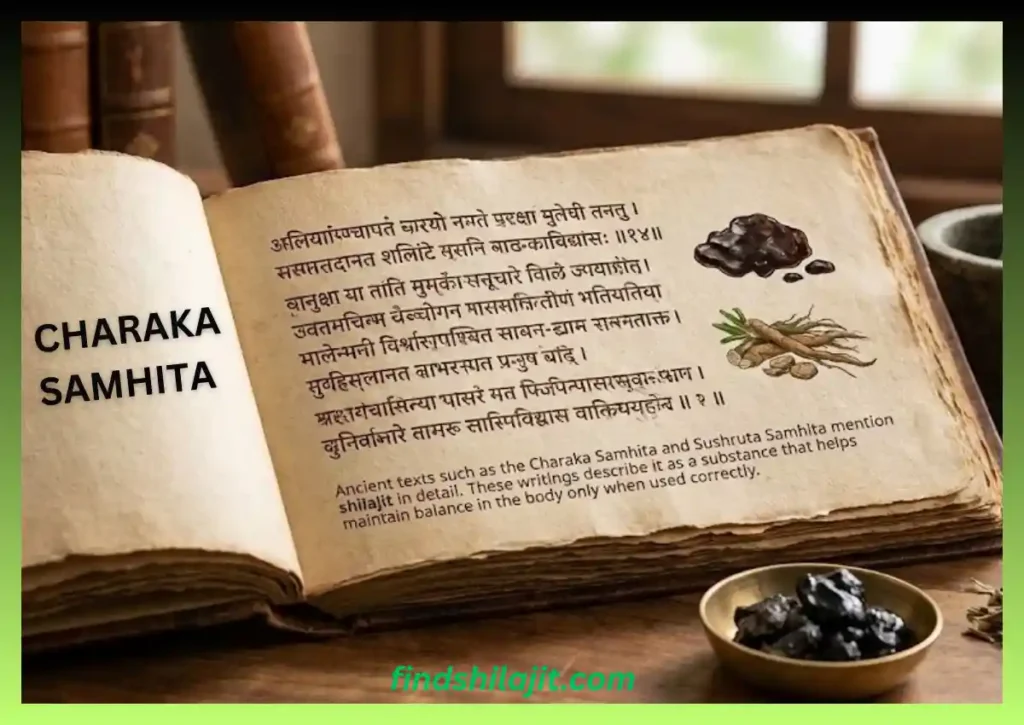
These writings describe it as a substance that helps maintain balance in the body only when used correctly. You should avoid using shilajit with some foods.
They also stressed the importance of purification before use, showing early awareness of safety and quality.
Traditional Shilajit Collection Methods
Historically, shilajit was collected by local mountain communities only. Collectors searched for dark resin on rock surfaces during warmer months and cleaned it using traditional methods.
This work required experience and patience, as shilajit was considered valuable and rare.
Difference Between Shilajit and Fossil Fuels
Shilajit is sometimes mistaken for tar or petroleum, but this is incorrect. Fossil fuels come from marine organisms and undergo chemical transformation deep underground.
Shilajit forms from terrestrial plant material through biological decomposition. It is an organic humic substance and has no chemical link to petroleum products.
Natural Color, Texture, and Seasonal Changes
Authentic shilajit changes with temperature. In cold weather, it becomes hard and brittle. In warm conditions, it softens and turns sticky. Its colour ranges from dark brown to black, depending on mineral content and organic composition. These changes are natural signs of genuine shilajit.
Adulteration and Fake Shilajit in History
Fake shilajit has existed for centuries. Ancient texts warned against impure forms mixed with soil or stones. Because shilajit was rare and valuable, imitation products appeared early in trade history. This is why purity has always been a major concern.
Importance of Purification
Raw shilajit is not safe to consume directly. It may contain heavy metals, debris, or microorganisms. Ancient practitioners developed purification methods using water and heat.
Today, purification involves laboratory testing, removal of contaminants, and standardisation of active compounds. Only purified shilajit should be used.
Early Scientific Discovery and Western Recognition
Western scientists began studying shilajit in the 19th and early 20th centuries. Early research focused on its mineral and organic content.
By the mid-20th century, controlled studies helped explain its composition, leading to its use in modern supplements after proper purification methods were developed.
Why Shilajit Cannot Be Recreated Artificially
Shilajit is not a single compound but a complex natural mixture. While laboratories can extract individual components like fulvic acid, they cannot recreate the full natural structure. This is why artificial substitutes cannot match true shilajit.
Evolution of Shilajit Use From Ancient to Modern Times
In ancient times, shilajit was used as raw resin dissolved in water or milk. Over time, it was processed into powders and capsules.
Today, modern forms like honey sticks improve taste and convenience. Although the form has changed, the natural source remains the same.
Why History Still Matters Today
Understanding shilajit’s history explains why quality varies, why purification is essential, and why shortcuts do not work. Its value comes from time, nature, and tradition rather than fast manufacturing.
Final Thoughts
Shilajit is not a modern invention. It is a natural substance shaped by mountains, climate, and ancient plant life over long periods. Its long history, careful traditional use, and modern scientific understanding explain why it continues to be valued today.
True shilajit shows that nature’s most valuable substances take time to form.
You May like:
Is Shilajit Good for Cats? Know Truth
Disclaimer
This article is for informational purposes only. Please consult a licensed healthcare provider before starting any new supplement, especially if you are pregnant, breastfeeding, or on medication.

Reviewed by: Dr. Rohan Kapadia, BAMS (India)
Ayurvedic physician with an interest in traditional herbal preparations, Ayurvedic wellness, Shilajit, Himalayan botanicals, ingredient quality, and the responsible communication of traditional health information.
View full profile →Medical review date: January 23, 2026