 By
ByIf you’ve searched Shilajit vs alcohol, you’re probably asking one practical question:
Can I enjoy alcohol occasionally without reducing the benefits of Shilajit?
Most articles simply tell you to avoid combining them. They rarely explain why.
The truth is more nuanced. Shilajit and alcohol do not directly “cancel each other out,” but they push your body in opposite physiological directions. Understanding those differences helps you decide when to take Shilajit, when to avoid it, and how to get the greatest benefit from supplementation.
This guide explains what current scientific evidence shows, what researchers still don’t know, and how to make safer decisions if you occasionally drink alcohol.
Key takeaway: There is currently no clinical study directly testing Shilajit and alcohol together in humans. Recommendations are based on how each affects hydration, nutrient metabolism, oxidative stress, liver function, and recovery.
Shilajit vs Alcohol: A Quick Comparison
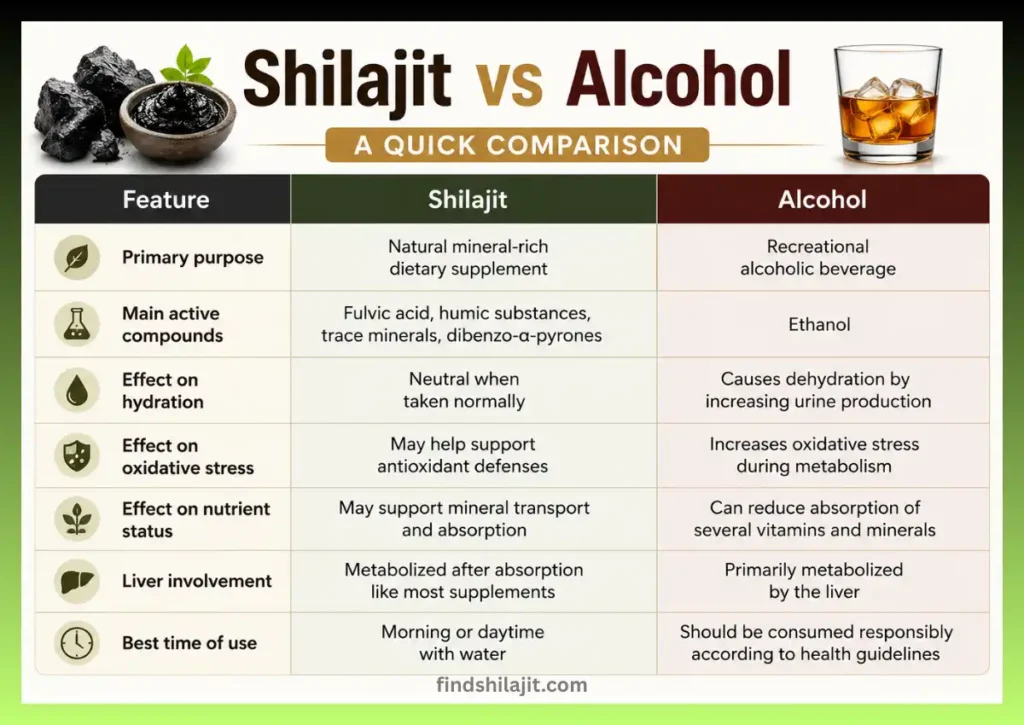
| Feature | Shilajit | Alcohol |
| Primary purpose | Natural mineral-rich dietary supplement | Recreational alcoholic beverage |
| Main active compounds | Fulvic acid, humic substances, trace minerals, dibenzo-α-pyrones | Ethanol |
| Effect on hydration | Neutral when taken normally | Causes dehydration by increasing urine production |
| Effect on oxidative stress | May help support antioxidant defenses | Increases oxidative stress during metabolism |
| Effect on nutrient status | May support mineral transport and absorption | Can reduce absorption of several vitamins and minerals |
| Liver involvement | Metabolized after absorption like most supplements | Primarily metabolized by the liver |
| Best time of use | Morning or daytime with water | Should be consumed responsibly according to health guidelines |
Notice that Shilajit is designed to support normal physiological function, while alcohol temporarily places additional demands on several body systems. This is why many healthcare professionals recommend separating their use.
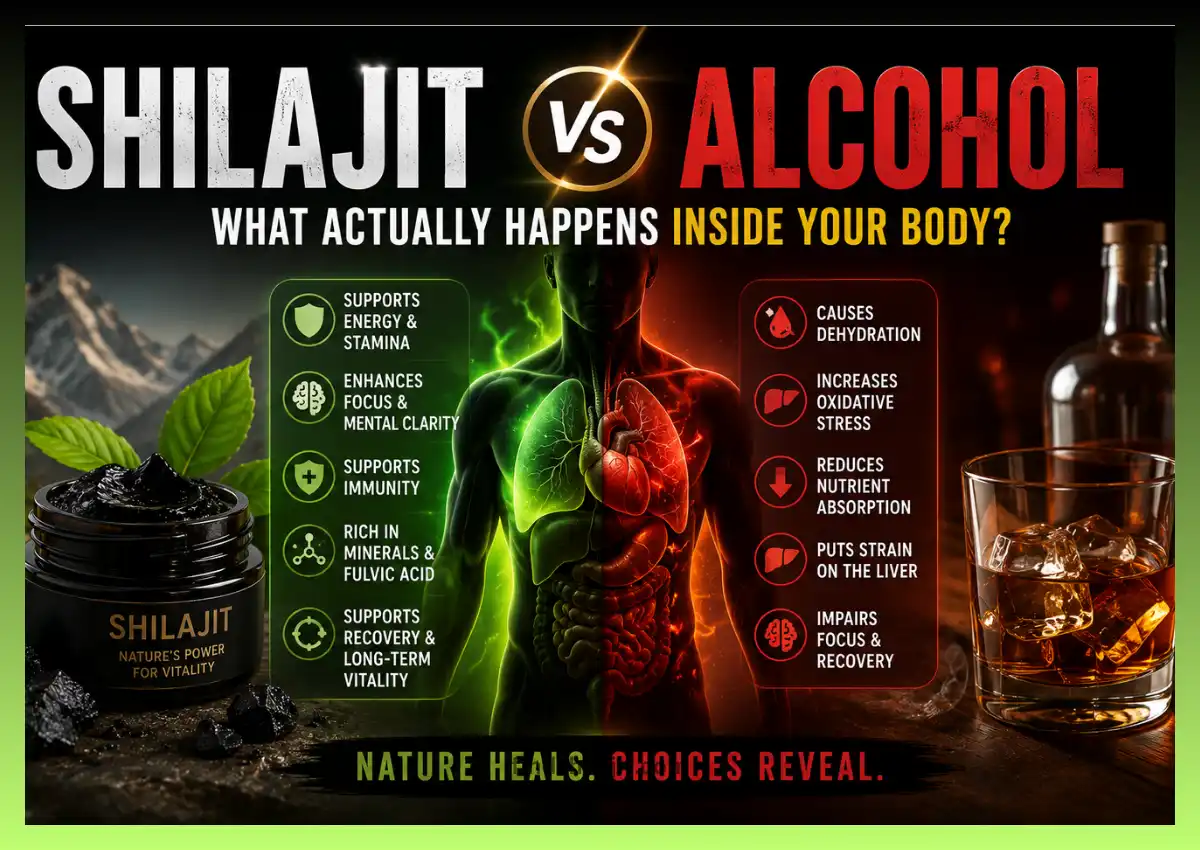
They Work in Opposite Directions
Thinking about Shilajit vs alcohol is easier when you compare what each encourages inside the body.
Shilajit generally supports
- Cellular energy production
- Healthy mitochondrial function
- Normal mineral utilization
- Antioxidant activity
- Physical recovery
- Daily wellness routines
Alcohol commonly causes
- Temporary dehydration
- Increased oxidative stress
- Sleep disruption
- Reduced recovery after exercise
- Impaired nutrient utilization
- Greater metabolic workload on the liver
This doesn’t mean one drink immediately removes every benefit of Shilajit. Instead, alcohol creates conditions that are less favorable for the biological processes Shilajit is commonly taken to support.
Why Timing Matters More Than Most People Realize
Many people only ask:
“How long after taking Shilajit can you drink alcohol?”
A better question is:
“When is my body in the best condition to benefit from Shilajit?”
Unlike stimulant supplements that produce immediate noticeable effects, Shilajit is generally used consistently over weeks or months. The goal is supporting normal cellular function over time rather than producing an instant boost.
If alcohol is consumed shortly after taking Shilajit:
- hydration begins decreasing,
- digestion changes,
- liver metabolism shifts toward processing ethanol,
- sleep quality later that night often declines.
These changes don’t necessarily create a dangerous interaction in healthy adults, but they may reduce the conditions that help you get the most from your supplement.
What Happens During the First Few Hours After Taking Shilajit?
Understanding absorption helps explain why spacing matters.
Although absorption varies by formulation and by individual, many of Shilajit’s active compounds begin passing through the digestive tract during the first several hours after consumption.
During this period your body is:
- absorbing minerals,
- transporting fulvic acid,
- processing naturally occurring bioactive compounds,
- distributing nutrients through circulation.
Heavy alcohol consumption during this same period introduces another major metabolic task.
This is one reason experts often recommend taking Shilajit earlier in the day and drinking, if at all, much later in the evening.
Does Alcohol Destroy Fulvic Acid?
This question receives surprisingly little attention.
Current research does not show that alcohol chemically destroys fulvic acid after it has been absorbed.
Instead, alcohol changes the body’s environment by:
- increasing fluid loss,
- affecting intestinal function,
- altering inflammatory pathways,
- increasing oxidative stress.
Therefore, the issue is not that alcohol “breaks” Shilajit.
The issue is that alcohol creates conditions where your body may be less prepared to fully benefit from supplementation.
That distinction is scientifically important because it avoids overstating what current evidence actually proves.
How Long After Taking Shilajit Can You Drink Alcohol?
One of the most searched questions is “How long after taking Shilajit can you drink alcohol?” Unfortunately, there isn’t a scientifically validated answer because no human clinical trial has tested different timing intervals.
However, we can make practical recommendations based on how supplements are absorbed and how alcohol is metabolized.
If You Plan to Drink in the Evening
For healthy adults who occasionally consume alcohol:
- Take Shilajit in the morning after breakfast or with warm water.
- Stay hydrated throughout the day.
- Allow several hours between your morning supplement and evening alcohol.
- Avoid taking another Shilajit dose immediately before drinking.
This approach gives your digestive system time to absorb the supplement before alcohol becomes the liver’s priority.
If You’re Going to Drink Heavily
If you expect to consume several alcoholic drinks, skipping that day’s Shilajit dose is often the more practical choice.
One missed dose is unlikely to affect the long-term benefits of a consistent Shilajit routine, whereas taking it immediately before heavy drinking provides little additional value.
If You Already Drank Alcohol
Many people wonder whether they should take Shilajit before bed after drinking.
Generally, this is not ideal because your body is already focused on:
- metabolizing ethanol,
- restoring fluid balance,
- repairing oxidative damage,
- maintaining blood sugar,
- recovering during sleep.
Instead, prioritize:
- drinking water,
- replacing electrolytes,
- eating a balanced meal if appropriate,
- getting adequate sleep.
Once you’re well hydrated the next day and no longer experiencing significant alcohol effects, you can resume your normal Shilajit routine.
Shilajit and Alcohol Together: Does Product Quality Matter?
Yes—and probably more than many people realize.
One issue often overlooked is that Shilajit is a naturally occurring mineral resin. Unlike synthetic supplements, its composition depends heavily on where it was collected and how it was purified.
Poor-quality products may contain:
- excessive heavy metals,
- unwanted environmental contaminants,
- inconsistent fulvic acid content,
- adulterants added during manufacturing.
Alcohol does not create these contaminants, but relying on an untested product while also placing extra metabolic demands on your body through drinking is not ideal.
When choosing Shilajit, look for:
- third-party laboratory testing,
- heavy metal analysis,
- microbial testing,
- clearly identified fulvic acid content when available,
- manufacturing under recognized quality standards such as GMP.
The quality of the supplement matters every day—not only when alcohol is involved.
Does Alcohol Affect Shilajit Benefits?
Alcohol doesn’t appear to completely eliminate Shilajit’s potential benefits.
Instead, the effect depends on several factors.
Occasional Moderate Drinking
For otherwise healthy adults who drink occasionally:
- long-term supplementation is unlikely to be completely negated,
- maintaining hydration becomes more important,
- consistency over weeks matters more than one isolated drinking event.
Frequent Drinking
Regular alcohol consumption presents a different picture.
Frequent drinking can contribute to:
- chronic inflammation,
- poor sleep,
- lower nutrient status,
- impaired recovery,
- reduced exercise performance,
- greater liver workload.
These factors may reduce the overall environment that supports many wellness goals people hope to achieve with Shilajit.
In other words, the issue isn’t necessarily a direct interaction between Shilajit and alcohol together—it’s that frequent alcohol use works against several healthy lifestyle habits that maximize supplement effectiveness.
Can Shilajit Prevent a Hangover?
This is one of the biggest myths circulating online.
Currently, there is no clinical evidence showing that Shilajit prevents hangovers.
Some people speculate that because Shilajit contains antioxidants and trace minerals, it may help recovery after drinking.
However, a hangover is influenced by many factors, including:
- dehydration,
- acetaldehyde exposure,
- sleep disruption,
- immune activation,
- electrolyte imbalance,
- individual genetics.
No supplement—including Shilajit—has been proven to reliably prevent all of these effects.
If someone advertises Shilajit as a “hangover cure,” that claim goes beyond available scientific evidence.
Should Athletes Combine Shilajit and Alcohol?
Athletes often take Shilajit to support:
- recovery,
- training consistency,
- physical performance,
- healthy energy production.
Alcohol can interfere with several of those same goals by affecting:
- muscle protein synthesis,
- hydration,
- sleep quality,
- glycogen restoration,
- recovery after exercise.
Because of this, athletes may gain more benefit by avoiding alcohol around intense training sessions, regardless of whether they take Shilajit.
Rather than asking whether Shilajit and alcohol together are safe, athletes may benefit more from asking whether alcohol supports their overall training goals. In many cases, limiting alcohol intake provides greater performance benefits than adding another supplement.
Who Should Be Most Careful About Combining Shilajit and Alcohol?
Although healthy adults who drink occasionally may simply need to separate the timing of Shilajit and alcohol, some groups should be far more cautious.
People With Liver Disease
The liver processes alcohol and also metabolizes many compounds from foods and supplements. Individuals with conditions such as:
- fatty liver disease,
- hepatitis,
- cirrhosis,
- elevated liver enzymes,
should avoid combining alcohol with supplements unless their healthcare provider recommends otherwise.
People Taking Prescription Medications
Alcohol can interact with many medications, including:
- blood pressure medicines,
- diabetes medications,
- sedatives,
- antidepressants,
- blood thinners.
If you’re already taking medication, adding both alcohol and Shilajit without professional advice introduces unnecessary uncertainty.
People With Low Blood Pressure
Some preliminary research suggests Shilajit may influence cardiovascular function, although evidence remains limited.
Alcohol can also temporarily lower blood pressure in some individuals.
If you already experience dizziness, fainting, or naturally low blood pressure, combining the two may increase those symptoms.
Pregnant or Breastfeeding Women
There is insufficient safety evidence regarding Shilajit use during pregnancy or breastfeeding, and alcohol is not considered safe during pregnancy.
Until better research becomes available, avoiding both is the safest approach.
Common Myths About Shilajit and Alcohol
Myth 1: Shilajit Completely Protects Your Liver From Alcohol
Reality:
No human clinical study has demonstrated that taking Shilajit prevents alcohol-related liver injury.
Laboratory and animal studies exploring antioxidant activity are promising but cannot be used to claim protection in people who drink alcohol.
Myth 2: It’s Safe Because They’re Both Natural
Reality:
Natural does not automatically mean harmless.
Alcohol is produced naturally through fermentation, yet excessive drinking is associated with well-established health risks.
Every supplement should be evaluated according to scientific evidence rather than whether it is “natural.”
Myth 3: More Shilajit Offsets More Alcohol
Reality:
Taking larger doses of Shilajit cannot compensate for excessive alcohol consumption.
Healthy recovery depends on:
- adequate sleep,
- hydration,
- balanced nutrition,
- physical activity,
- responsible alcohol intake.
No supplement replaces these fundamentals.
Practical Advice for Occasional Drinkers
If you use Shilajit regularly but enjoy alcohol occasionally, these habits help minimize potential issues.
- Take Shilajit earlier in the day rather than immediately before drinking.
- Drink plenty of water before, during, and after alcohol consumption.
- Eat a balanced meal instead of drinking on an empty stomach.
- Avoid binge drinking.
- Resume your normal Shilajit routine once you’re fully hydrated.
- Choose a high-quality, third-party tested Shilajit product.
- Stop using the supplement and seek medical advice if you experience unexpected symptoms.
For most healthy adults, consistency matters far more than trying to “time” every single dose perfectly.
Frequently Asked Questions
Is it safe to take Shilajit and alcohol together?
There is no clinical evidence showing that moderate alcohol and Shilajit create a dangerous interaction in healthy adults. However, because research is limited, it’s generally recommended to avoid taking them at the same time and to separate them by several hours.
How long after taking Shilajit can you drink alcohol?
No official medical guideline exists. Taking Shilajit in the morning and drinking later in the evening provides a practical separation for most healthy adults. If you plan to drink heavily, skipping that day’s supplement may be the better option.
Can I take Shilajit the morning after drinking?
Yes, provided you are well hydrated, have eaten normally, and are no longer experiencing significant effects from alcohol. Rehydration should come before supplementation.
Does alcohol stop Shilajit from working?
Not completely. Occasional alcohol consumption is unlikely to eliminate the benefits of long-term Shilajit use. However, frequent or heavy drinking may reduce the healthy lifestyle conditions that help supplements work most effectively.
Is Shilajit good for hangovers?
There is currently no scientific evidence proving that Shilajit prevents or treats hangovers. While its antioxidant and mineral content has attracted research interest, it should not be considered a hangover remedy.
Which is more harmful: Shilajit or alcohol?
When obtained from reputable manufacturers and used appropriately, purified Shilajit has generally shown a favorable safety profile in available research. Alcohol, particularly when consumed excessively over time, is associated with well-documented risks affecting the liver, heart, brain, sleep, and overall health.
Final Verdict
When comparing Shilajit vs alcohol, the two serve entirely different purposes.
Shilajit is a traditional mineral-rich supplement commonly used to support energy, recovery, and overall wellness, while alcohol is a recreational beverage that places temporary stress on hydration, metabolism, sleep, and recovery.
Current scientific evidence does not show that occasional alcohol completely cancels the benefits of Shilajit. At the same time, there is no human clinical research confirming that Shilajit and alcohol together are completely free from interactions.
The most balanced approach is simple:
- Use Shilajit consistently as part of a healthy lifestyle.
- If you drink alcohol, do so responsibly and in moderation.
- Keep several hours between your supplement and alcohol whenever possible.
- Stay well hydrated.
- Choose only purified, third-party tested Shilajit products.
- Speak with a healthcare professional if you have liver disease, kidney disease, take prescription medications, or have any chronic medical condition.
Ultimately, no supplement can compensate for excessive alcohol consumption. Long-term health depends far more on healthy daily habits than on any single supplement or beverage.
Also Read:
Is Upakarma Shilajit Legit? Real or Fake?
Is Dabur Shilajit Legit? Does It Work?
References
- Stohs SJ, Ray SD. A Review and Evaluation of the Efficacy and Safety of Shilajit (Mumie). Phytotherapy Research.
- Meena H, Pandey HK, Arya MC, Ahmed Z. Shilajit: A Panacea for High-Altitude Problems. International Journal of Ayurveda Research.
- Carrasco-Gallardo C, Guzmán L, Maccioni RB. Shilajit: A Natural Phytocomplex with Potential Procognitive Activity. International Journal of Alzheimer’s Disease.
- National Institute on Alcohol Abuse and Alcoholism (NIAAA). Alcohol’s Effects on the Body.
- MedlinePlus, U.S. National Library of Medicine. Alcohol Metabolism and Liver Health.
- NHS. Alcohol and Health: Risks, Blood Pressure, and Safe Drinking Guidance.
- Office of Dietary Supplements, National Institutes of Health. Dietary Supplement Safety and Consumer Guidance.
Disclaimer
This article is for informational purposes only. Please consult a licensed healthcare provider before starting any new supplement, especially if you are pregnant, breastfeeding, or on medication.

Reviewed by: Dr. Aarya Mehta, MD (India)
Internal medicine physician with an interest in health education, nutrition, metabolic health, dietary supplements, herbal ingredients, and responsible supplement safety information.
View full profile →Medical review date: July 7, 2026