 By
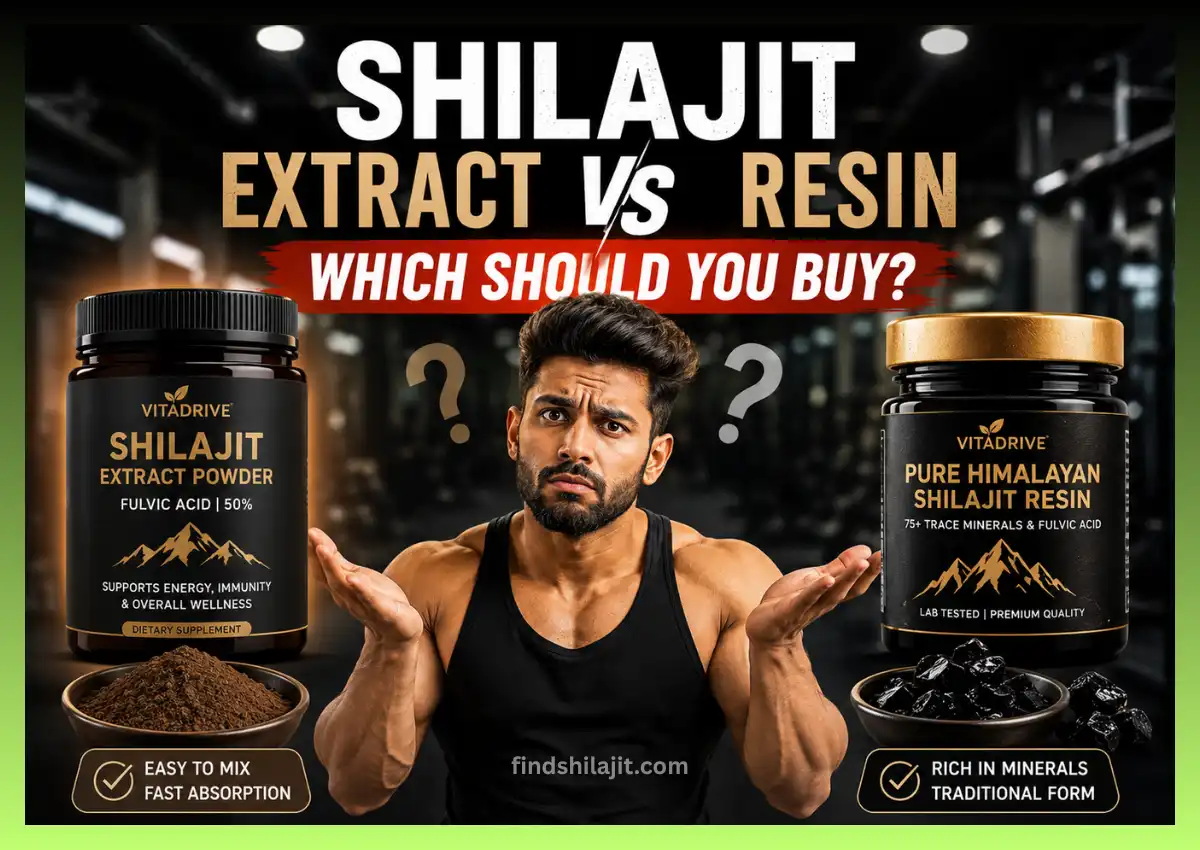
ByAre you confused about Shilajit Extract vs. resin: Which one to buy?
Quick answer: resin is the closer-to-raw form with the fuller mineral profile; extract is the processed, standardized, easier-to-dose form.
Neither is universally “better.” The right choice depends on what you’re optimizing for: potency and tradition, or consistency and convenience.
What is shilajit resin?
Resin is shilajit in its most natural state. It’s harvested from high-altitude rock crevices in the Himalayas, Altai Mountains, and a few other ranges, then purified by dissolving it in water, filtering out debris, and slowly evaporating the liquid back down into a thick, tar-like paste.
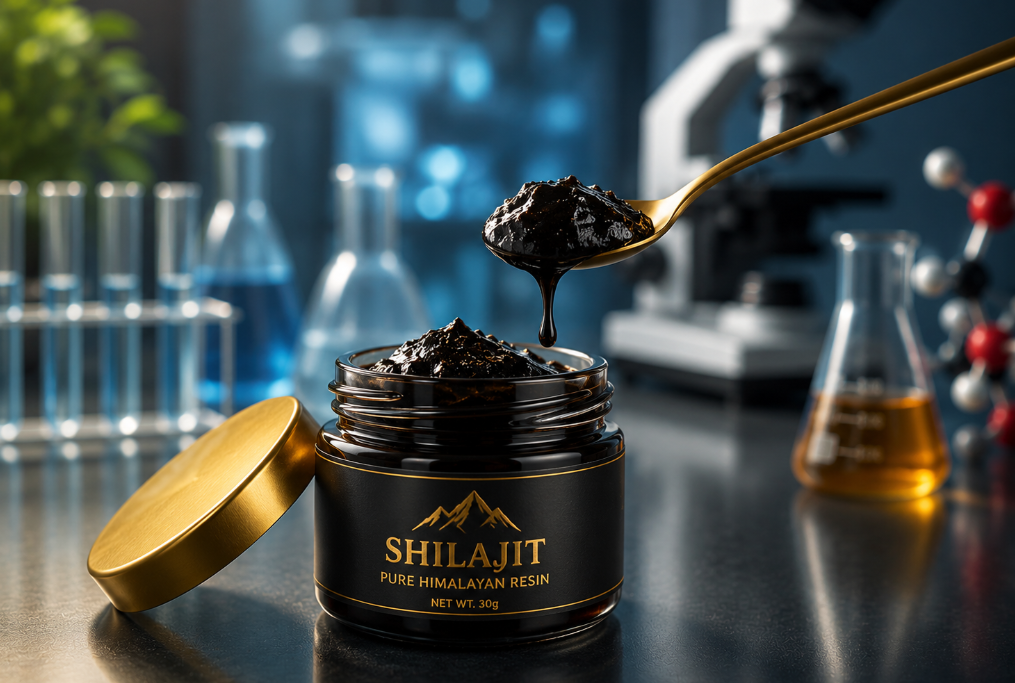
It’s sticky at room temperature, hardens when cold, and has a strong, bitter, mineral taste. You take it by dissolving a pea-sized amount in warm water or milk.
Because it goes through the least processing, resin keeps its full natural spread of compounds: fulvic acid, humic acid, dibenzo-alpha-pyrones, and 80-plus trace minerals in roughly the ratio nature put them in.
What is shilajit extract?
Extract is shilajit that’s been processed further after purification, usually to concentrate or standardize one specific compound, almost always fulvic acid.
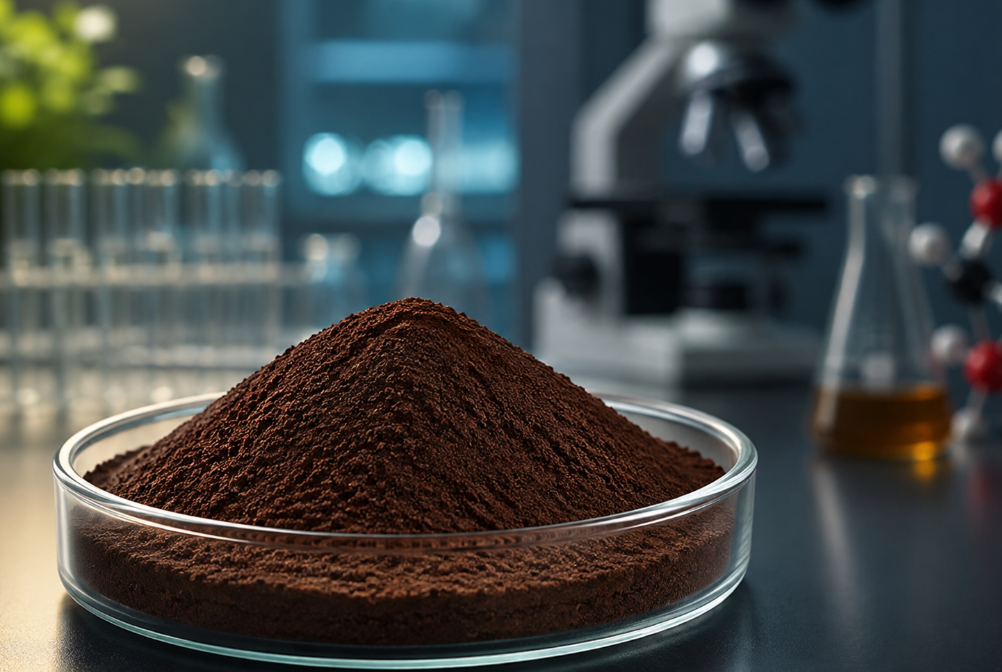
It shows up as capsules, powders, or liquid drops. Manufacturers can label an extract “standardized to 50% fulvic acid,” which guarantees a specific, repeatable dose every time.
Extract trades some of the resin’s natural compound spread for consistency and convenience. No taste to deal with, no sticky mess, and a capsule gives you an exact milligram amount instead of an eyeballed scoop.
Shilajit extract vs resin: the real differences
| Factor | Resin | Extract |
| Processing | Minimal (purified only) | Purified plus concentrated/standardized |
| Fulvic acid content | Naturally 5-20% in most authentic samples | Often standardized to 50%+ |
| Full mineral spectrum | Retained | Partially reduced depending on method |
| Dosing | Manual, by eye or scale | Precise, pre-measured |
| Taste | Strong, bitter, earthy | Usually masked in capsules |
| Ease of use | Requires mixing into water/milk | Swallow and go |
| Adulteration risk | Easier to spot with home tests | Harder to verify without lab testing |
| Shelf stability | Very long if stored properly | Long, varies by formulation |
Shilajit resin benefits
Resin is shilajit closest to its natural state, and the benefit list goes beyond “energy and stamina”:
- Lipid support. A 45-day double-blind trial (Sharma et al., 2003) found processed shilajit lowered LDL, VLDL, and triglycerides versus placebo, while raising HDL.
- Antioxidant markers. The same trial showed increases in superoxide dismutase, vitamin C, and vitamin E in the shilajit group, meaning it may support the body’s own antioxidant defenses rather than acting as an antioxidant itself.
- Cognitive research interest. Preclinical and early human research (Carrasco-Gallardo et al., 2012) has looked at shilajit’s fulvic acid for supporting healthy brain aging, though this line of research is still exploratory, not conclusive.
- Iron and hemoglobin support. Traditional Ayurvedic use includes shilajit for mild anemia, tied to its natural iron content. This is a real mechanism, and also the reason it’s risky for certain people (see cons below).
- Full compound retention. Because it skips extra processing, resin keeps dibenzo-alpha-pyrones and humic acid alongside fulvic acid, compounds some researchers believe work together rather than in isolation.
Cons: Resin is hardest to verify at home if you’re not experienced with it, since fake product uses charcoal or plant resin to mimic the look and stickiness. Iron content that’s a benefit for some is a real risk for anyone with hemochromatosis, thalassemia, or another iron-overload condition. It’s also messier to dose accurately without a scale, and unpurified batches carry heavy metals more directly than a filtered capsule would.
Dosage: Most clinical protocols and manufacturer guidelines land on 300 to 500 mg per day, roughly a rice grain to pea-sized amount dissolved in warm (not boiling) water or milk. Start at 150 to 200 mg for the first one to two weeks to check tolerance. Don’t exceed 1,000 mg daily; higher amounts haven’t shown better results and raise the odds of digestive upset.
Shilajit extract benefits
Extract’s case is about reliability, not raw potency:
- Standardized fulvic acid dosing, which matters if you’re trying to compare your intake to what a specific study used.
- Lower microbial risk in some cases, since standardization usually involves additional filtration and heat processing that can reduce contamination beyond basic purification.
- Formula stacking. Capsules let manufacturers combine shilajit with D3, K2, or ashwagandha in one consistent dose, which resin can’t do on its own.
- No taste barrier, which is the actual reason most people who start resin stop taking it within a month.
Cons: Every added processing step is a place fillers or synthetic fulvic acid can get introduced, and you can’t run a home purity test on a capsule the way you can on visible resin. Some capsule shilajit needs to break down in stomach acid before the fulvic acid is released, which may absorb slightly slower than resin pre-dissolved in warm liquid. Fulvic acid claims above roughly 60% on a capsule label are more often a sign of synthetic spiking than superior sourcing.
Dosage: Typical capsule dosing runs 500 to 1,000 mg per day, higher than resin by weight because concentration and fillers vary. Follow your specific product’s label rather than a generic number, since two brands claiming “500 mg shilajit” can deliver very different actual fulvic acid amounts.
Safety notes for both forms
Regardless of resin or extract, skip shilajit or talk to a doctor first if you have hemochromatosis, thalassemia, gout or high uric acid, an active autoimmune condition, or you’re pregnant or breastfeeding. It can interact with blood thinners, thyroid medication, diabetes medication, and blood pressure medication, so flag it to your doctor if you’re on any of those. Mild digestive upset, headache, or a warming sensation are the most commonly reported side effects at normal doses.
Is shilajit extract or resin better?
Neither wins outright. It depends on two things: your priorities, and how much you trust the specific brand you’re buying from.
Go with resin if you want the traditional, full-spectrum product, don’t mind the taste and prep, and can verify the source (or the seller provides a current Certificate of Analysis).
Go with extract/capsules if you want a guaranteed dose, hate the taste of resin, or you’re taking it daily and want zero friction. Just make sure the brand publishes fulvic acid percentage and heavy-metal testing, since capsules hide adulteration far more easily than resin does.
One thing worth knowing before you shop by fulvic acid percentage: it’s not a simple “higher is better” number. Authentic Himalayan resin naturally tests around 5% to 20% fulvic acid depending on altitude and purification method. Extracts standardized above 50% aren’t necessarily fake, but a product claiming 70% to 90% fulvic acid, especially at a bargain price, is a red flag for synthetic fulvic acid or a diluted non-Himalayan source rather than a marker of superior quality.
Purity concerns: resin vs extract
Adulteration is a real, documented problem across the shilajit market in both forms, not just one:
- Resin gets cut with charcoal powder, coal tar, soil, or plant resins to bulk up volume and mimic the dark color and sticky texture.
- Extract/capsules get diluted with fillers, or spiked with cheap synthetic fulvic acid to hit a marketing-friendly percentage, and you can’t see or smell any of it since it’s already in a pill.
Home tests (dissolving a piece in warm water, the flame test, checking for elasticity) can flag obvious fakes in resin. None of that works on a capsule.
If you’re buying extract, a third-party lab report showing fulvic acid content and heavy metal levels (lead, arsenic, cadmium, thallium) is the only real way to know what you’re taking.
How to choose
Ask yourself these three questions before buying either form:
- Can I see a current, independent Certificate of Analysis from the brand? If not, skip it regardless of resin or extract.
- Am I actually going to take this consistently? If taste and prep will make you quit, buy the capsule form even if resin is “purer” on paper.
- Does the fulvic acid claim make sense? Anything above roughly 60% deserves a closer look at sourcing, not automatic trust.
The bottom line
Resin gives you shilajit closer to its natural state, with the full trace mineral and compound profile intact, but it demands more trust in the source and more effort to use. Extract gives you consistency and convenience at the cost of extra processing, and it’s easier for a bad manufacturer to hide problems in a capsule than in a visible chunk of resin. Buy whichever form you’ll actually take every day, from a brand that shows you the lab results instead of asking you to take their word for it.
Also Read
Shilajit vs Viagra: Which one is best?
Shilajit vs Tongkat ali vs Fadogia?
Shilajit Pro Max: Benefits, Uses & Worth Buying?
Scientific research and resources
- Stohs, 2014, Phytotherapy Research — safety and efficacy review of purified shilajit in animal and human studies
- Pandit et al., 2016, Andrologia — clinical trial on purified shilajit and testosterone levels
- Keller et al., 2019, Journal of the International Society of Sports Nutrition — clinical trial on shilajit, muscular strength, and fatigue recovery
- Kamgar et al., 2023, Critical Reviews in Analytical Chemistry — comprehensive review of shilajit’s chemical composition
- Kamgar et al., 2025, BMC Chemistry — thallium contamination testing in commercial shilajit and shilajit supplements
- Shilajit purity and lab testing guide — HPLC methods, fulvic acid benchmarks, and adulteration patterns across resin, powder, and capsule forms
- Shilajit overview, Wikipedia — composition, formation, and traditional background
Disclaimer
This article is for informational purposes only and isn’t medical advice. These statements haven’t been evaluated by the FDA. Dietary supplements aren’t intended to diagnose, treat, cure, or prevent any disease. Talk to a licensed healthcare provider before starting any new supplement, especially if you’re pregnant, breastfeeding, taking medication, or managing a health condition. If you experience an adverse reaction, stop use and contact your doctor, or report it to the FDA through MedWatch.

Reviewed by: Dr. Natha Thomas, PhD (USA)
Nutrition and supplement research professional interested in nutritional science, dietary supplements, nutrient bioavailability, scientific literature, and how research findings are communicated to consumers.
View full profile →Medical review date: September 5, 2026