 By
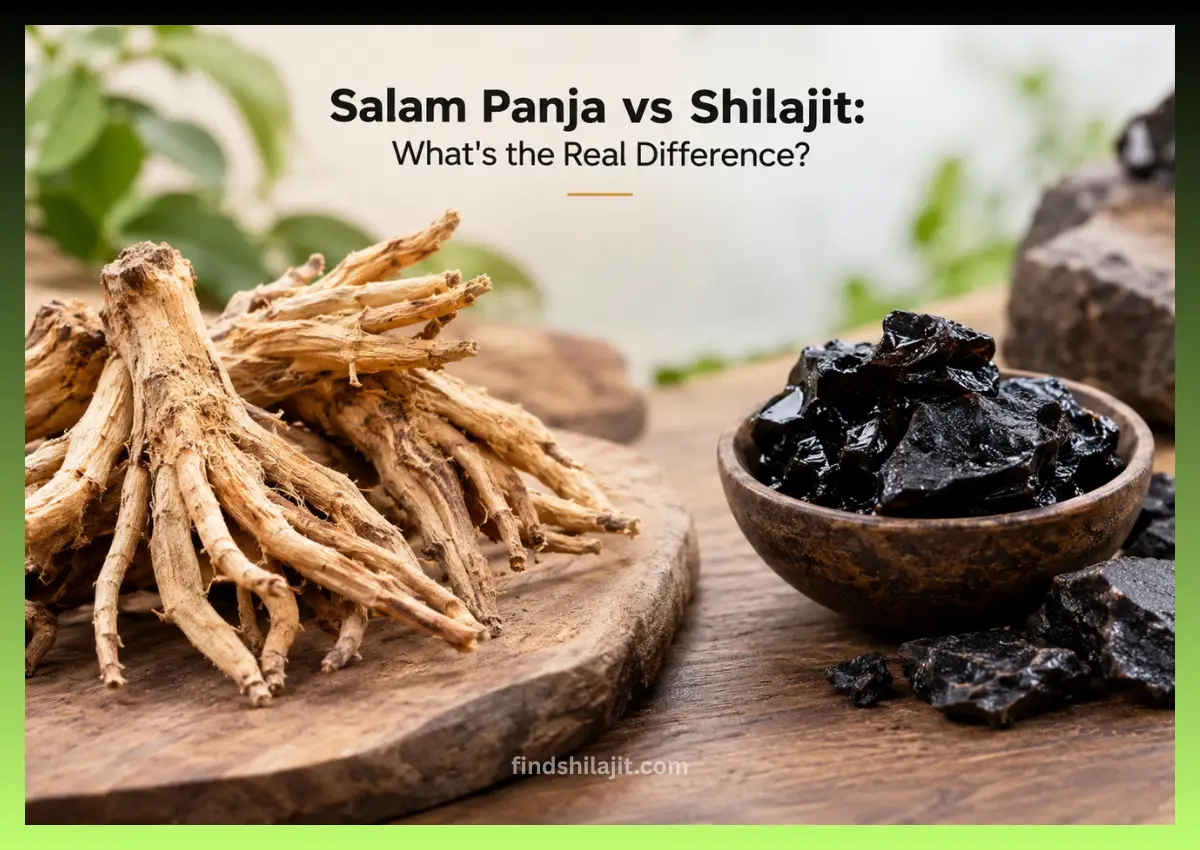
BySalam Panja and Shilajit are two of the most common Himalayan ingredients in Ayurvedic and Unani vitality supplements but they aren’t the same thing, and they aren’t interchangeable.
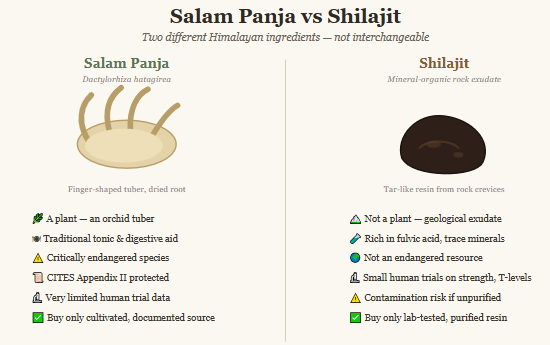
Salam Panja is a tuber from a critically endangered orchid, while Shilajit is a mineral-rich resin exuded from rocks. Below is a straight comparison of what each one actually is, what evidence exists for their use, and what to check before buying either.
What Is Salam Panja?
Salam Panja comes from the tuber of Dactylorhiza hatagirea, an orchid native to high-altitude regions of the Himalayas, including parts of India, Nepal, Pakistan, and Tibet. The tuber is finger-shaped which is where the name comes from, since “panja” means “hand” or “claw” in Hindi/Urdu.
It’s traditionally used in Ayurveda, Unani, and Siddha medicine as a general tonic, for digestive complaints, and as an aphrodisiac for male sexual health. Its tubers are rich in starch and mucilage, along with bioactive compounds like saponins and flavonoids.
The important part most sellers don’t mention: Salam Panja is listed as critically endangered by conservation assessments in India and Nepal, and it’s protected under Appendix II of CITES (the international treaty regulating trade in endangered species). Wild populations have been shrinking for years because of overharvesting one estimate puts annual wild collection in the North-Eastern Himalayas at 6,200 to 31,000 kg, and separate field research puts the market cost at roughly ₹10,000–20,000 per kg of dried root, with an estimated 90–100 mature plants needed to produce that 1 kg [4]. In Nepal, collecting and trading it is legally restricted.
Salam Panja Benefits
Most of these come from traditional Ayurvedic/Unani use, not human clinical trials worth keeping in mind as you read them.
- Energy and stamina: traditionally used to reduce weakness and fatigue.
- Digestive support: the tuber’s mucilage content is believed to soothe digestion.
- Male reproductive health: long used as an aphrodisiac for low libido and general vitality.
- Immune support: traditionally taken as a general immunity tonic.
- Anti-inflammatory potential: contains flavonoids and antioxidants thought to help reduce inflammation.
- Bone and wound healing: traditionally applied as a paste for fractures and wounds.
- Postpartum recovery: traditionally used to help women regain strength after childbirth.
Note: these are traditional and anecdotal uses. There’s no significant human clinical trial data confirming these effects.
What Is Shilajit?
Shilajit is a blackish-brown, tar-like substance that seeps out of rock crevices in high-altitude mountain ranges, formed over centuries from the slow decomposition of plant matter compressed under rock layers. It’s not a plant or an animal product, it’s closer to a mineral-organic exudate.
Its main studied components are fulvic acid and dibenzo-α-pyrones, along with trace minerals. It’s traditionally used in Ayurveda as a rasayana (rejuvenative) for energy, stamina, and general vitality.
Shilajit has more modern clinical research behind it than Salam Panja does, though each individual study comes with real limitations worth understanding before you read the results as more settled than they are:
- A randomized, double-blind, placebo-controlled study in men aged 45–55 found that a tablet containing purified Shilajit (250 mg twice daily) raised total testosterone, free testosterone, and DHEAS significantly compared to placebo over 90 days, without disrupting LH or FSH [5]. Important nuance: the tested tablets combined 250 mg purified Shilajit with 250 mg Triphala per dose, with Triphala listed in the study as a pharmaceutical binding agent. Triphala itself is a recognized Ayurvedic formulation with its own studied effects, so this result reflects the Shilajit-Triphala tablet as tested; it can’t be cleanly attributed to Shilajit alone.
- A separate 28-day pilot study using a branded resin formulation (TruBlk™ Shilajit Resin) reported improvements in strength, endurance, grip strength, and a drop in the inflammation marker CRP [6]. Important nuance: this was a single-arm, open-label study with 25 participants and no placebo or control group, funded and run in connection with the company that makes the tested product. That doesn’t make the findings meaningless, but “no comparison group” is a much bigger limitation than “small and short-term” alone within-group improvements like these can partly reflect factors other than the supplement itself (e.g., participants training more consistently while being monitored).
A broader 2023 systematic review and meta-analysis looking specifically at Shilajit’s effect on androgen levels and sperm quality in male infertility found supportive but still limited evidence overall, and called for larger, better-controlled trials [7] a useful reminder that even taken together, the human evidence is still an early, evolving picture rather than a settled conclusion.
Shilajit Benefits
Shilajit has more human research behind it than Salam Panja, though studies are still small, mostly short-term, and as above often industry-funded or use combination formulations rather than isolated Shilajit.
- Testosterone support: a 90-day placebo-controlled trial found significant increases in total and free testosterone in men aged 45–55, using a Shilajit-Triphala combination tablet.
- Physical performance: a 28-day, uncontrolled pilot study found improved strength, endurance, and grip strength with a specific branded resin.
- Reduced fatigue: the same study reported lower fatigue-severity scores and perceived exertion.
- Antioxidant activity: fulvic acid, its main active compound, is studied for reducing oxidative stress.
- Lower inflammation markers: CRP dropped significantly in the same uncontrolled pilot study.
- Traditional rejuvenation (rasayana): is long used in Ayurveda for general vitality and anti-aging, though this specific claim isn’t clinically proven.
Note: most trials are small, short-term, and either industry-funded or based on Shilajit combined with other promising, not conclusive.
Salam Panja vs Shilajit: Side-by-Side
| Salam Panja | Shilajit | |
| What it is | Tuber of an orchid (Dactylorhiza hatagirea) | Mineral-rich resin exuded from rock |
| Traditional use | Tonic, digestive aid, male vitality/aphrodisiac | Rejuvenative tonic, energy, stamina, vitality |
| Key compounds | Starch, mucilage, saponins, flavonoids | Fulvic acid, dibenzo-α-pyrones, trace minerals |
| Human clinical evidence | Very limited; mostly traditional-use records | Small trials showing testosterone and performance changes mostly combination formulas or single-brand, uncontrolled designs |
| Conservation status | Critically endangered; CITES Appendix II | Not an endangered species; sourced from rock deposits |
| Main safety concern | Illegal/unsustainable wild harvesting; product authenticity | Heavy-metal or microbial contamination if unpurified |
| What to check before buying | Cultivated (not wild-collected) source, legal sourcing documentation | Third-party lab testing for heavy metals, purification method |
Is Salam Panja Safe to Buy and Use?
There’s no reliable answer without checking two things first: where your specific product was sourced, and whether the seller can document that. Because wild D. hatagirea is critically endangered and its trade is restricted in Nepal and controlled under CITES in India, buying a wild-harvested product likely contributes to further population decline, and in some regions may involve products collected or traded illegally. If you’re considering it, look specifically for suppliers who state a cultivated (not wild-collected) source. Sellers rarely volunteer this detail, so it’s worth asking directly.
Is Shilajit Safe to Use Daily?
Short-term use of purified Shilajit (250–500 mg/day) has been well tolerated in the human trials conducted so far, with no serious adverse effects reported over 28–90 days. There’s no long-term human safety data beyond that window.
The bigger safety issue with Shilajit isn’t the substance itself, it’s contamination. Raw, unpurified resin collected from rock can carry heavy metals, free radicals, or microbial contamination if it isn’t properly processed. Reputable brands publish third-party lab results for heavy metals (lead, arsenic, mercury, cadmium) and list a purification method. If a seller can’t show that, that’s a reason to look elsewhere, not a detail to skip.
Which One Should You Choose?
If you’re comparing them for general energy and vitality support, Shilajit currently has more (though still limited and sometimes confounded) clinical research behind it, and it doesn’t carry the same conservation and legality concerns that Salam Panja does. If you’re specifically looking at products marketed for male sexual health, some Unani/Ayurvedic formulations combine both but that doesn’t mean combining them is better studied; it usually just means less is known about either ingredient in that specific product, let alone the combination.
Shilajit Dosage and Side Effects
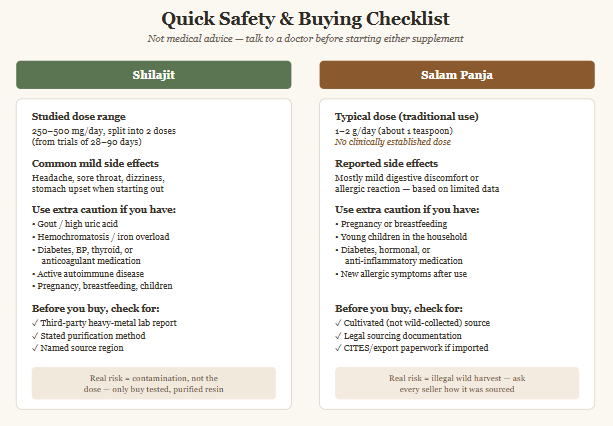
Most human studies on purified Shilajit have used 250–500 mg per day, typically split into two doses, taken for 28 to 90 days. That’s the range you’ll see reflected in most reputable product labels; there’s no officially established medical dosage beyond what these trials tested.
Reported side effects are uncommon at these doses but can include mild headaches, sore throat, dizziness, or stomach upset, especially when starting out. These usually ease within a few days or resolve if the dose is lowered.
Who should be cautious or avoid it:
- People with gout or high uric acid Shilajit’s mineral and purine-related content has led some clinicians to advise caution, though this specific interaction hasn’t been directly tested in human trials; check with a doctor if you have gout or elevated uric acid.
- People with hemochromatosis or other iron-overload conditions Shilajit’s mineral content includes bioavailable iron, which is a reasonable caution for anyone managing iron overload; ask your doctor before use.
- Anyone on antidiabetic medication, blood pressure medication, thyroid medication (e.g., levothyroxine), anticoagulants, or testosterone/androgen therapy Shilajit’s mineral and hormone-related activity means it could plausibly amplify or interfere with these; this hasn’t been well studied directly, so treat it as a reason to talk to your doctor, not an established interaction.
- Pregnant or breastfeeding women, and children there’s no safety data for these groups, so it’s best avoided.
- Anyone with active autoimmune disease Shilajit has immune-modulating properties in preliminary research that could theoretically affect autoimmune activity; use only under specialist guidance.
The bigger real-world risk isn’t the dose it’s contamination. Raw, unpurified Shilajit collected from rock can carry heavy metals or microbial contamination. Only buy from brands that publish third-party lab testing for heavy metals (lead, arsenic, mercury, cadmium) and state a purification process.
Salam Panja Dosage and Side Effects
Unlike Shilajit, there’s no clinically established dosage for Salam Panja; the numbers you’ll see on product pages (commonly 1–2 grams or roughly a teaspoon per day, sometimes mixed with milk or other herbs) come from traditional use and seller recommendations, not controlled human trials. Treat any specific dosage claim for this herb as traditional guidance, not a clinically validated figure.
Reported side effects are based mainly on anecdotal reports and animal studies rather than human clinical data, and tend to be mild digestive discomfort or allergic reaction in sensitive individuals. Because rigorous human safety data is limited, that “mild” profile hasn’t been confirmed the way it has for better-studied herbs.
Who should be cautious or avoid it:
- Pregnant or breastfeeding women components may pass into breast milk, and safety hasn’t been established.
- Children avoid unless specifically guided by a healthcare provider.
- Anyone taking medication with overlapping effects (antidiabetic, hormonal, anti-inflammatory) herb-drug interaction risk hasn’t been well studied, so tell your doctor before combining.
- Anyone noticing allergic symptoms or persistent stomach discomfort after use stops and seeks medical advice.
Frequently Asked Questions
Can Salam Panja and Shilajit be taken together?
They’re sometimes combined in traditional formulations, but there’s no clinical research on the combination specifically. If you’re considering a combined product, the sourcing and purity questions above apply to both ingredients, not just one.
Is Salam Panja illegal to buy?
It depends on the country and how it was harvested. In Nepal, collection and trade of wild D. hatagirea is restricted by law. In India, it’s regulated under CITES Appendix II, meaning cross-border trade requires permits. Buying from a supplier who can’t document a legal, non-wild source carries real legal and ecological risk.
Does Shilajit actually raise testosterone?
The best current evidence is a 90-day randomized, placebo-controlled trial in men aged 45–55 found a statistically significant increase in total and free testosterone [5]. It’s a real finding, but the tested product combined Shilajit with Triphala, the trial was small, and a 2023 meta-analysis of the wider evidence base described the overall picture as supportive but still limited [7]. Treat it as encouraging, not conclusive.
Which is more expensive, Salam Panja or Shilajit?
Salam Panja tends to command a high price partly because of its scarcity. Field research puts dried wild root at roughly ₹10,000–20,000 per kg [4]. Shilajit pricing varies widely by purity and brand, but it isn’t tied to the same endangered-species scarcity.
This article is for general information and isn’t a substitute for medical advice. Consult a qualified healthcare provider before starting any new supplement, especially if you have an existing health condition, take medication, or are pregnant or breastfeeding.
Also Read: Shilajit Heavy Metals: Safe Limits for Pb, Hg, As, Cd & Tl
Sources
- Genetic diversity and population structure of critically endangered Dactylorhiza hatagirea Kapila et al., Scientific Reports, 2022. nature.com/articles/s41598-022-15742-1
- Dactylorhiza hatagirea. The IUCN Red List of Threatened Species 2022: e.T184558707A206539925. researchgate.net/publication/368364855
- Illegal harvesting and livestock grazing threaten the endangered orchid Dactylorhiza hatagirea in Nepalese Himalaya Chapagain et al., Ecology and Evolution, 2021. onlinelibrary.wiley.com/doi/10.1002/ece3.7520
- Dactylorhiza hatagirea: A high-value medicinal orchid Pant & Rinchen, 2012 (price and harvest-ratio data). researchgate.net/publication/272073245
- Clinical evaluation of purified Shilajit on testosterone levels in healthy volunteers Pandit et al., Andrologia, 2016. pubmed.ncbi.nlm.nih.gov/26395129
- Safety and Efficacy of TruBlk™ Shilajit Resin Supplementation on Physical Performance and Blood Biomarkers in Healthy Adults: A 28-Day Open-Label Pilot Study Yadav et al., 2026. pmc.ncbi.nlm.nih.gov/articles/PMC12848467
- Safety and Efficacy of Shilajit in Improving Androgen Levels and Sperm Quality in Male Infertility: A Systematic Review and Meta-Analysis Al-Sa’di et al., Journal of Clinical Medicine, 2023. pubmed.ncbi.nlm.nih.gov/38217316
Disclaimer
This article is for informational and educational purposes only and is not intended to provide medical advice, diagnose or treat any health condition, or replace guidance from a qualified healthcare professional. Shilajit is a dietary supplement, and its effects, safety, and suitability may vary from person to person. Consult a licensed healthcare provider before using Shilajit or any new supplement, particularly if you are pregnant, breastfeeding, taking medication, or have an existing medical condition. Do not use this information as a substitute for professional medical advice.