 By
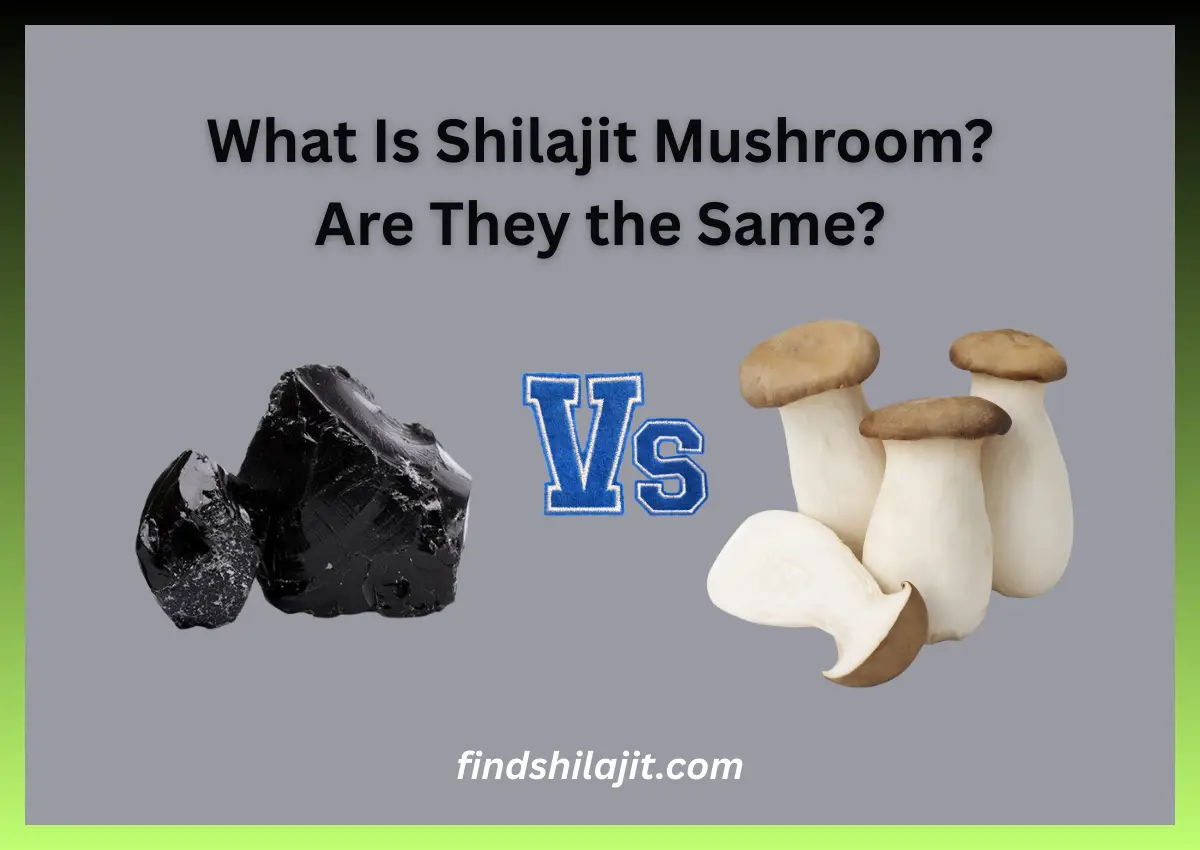
ByWhen people search on Google whether shilajit and mushrooms are the same, there is a lot of confusion, especially online. Many people are often confused about shilajit and sometimes believe it is made from mushrooms, which is not correct.
In this article, we will clarify what shilajit actually is, explain common myths, compare it with mushrooms, share what science says about its benefits, and look at real-world supplement reviews. We will also highlight some products from trusted brands to provide helpful context.
What Is Shilajit?
Basically, shilajit is not a mushroom. It’s a mineral-rich sticky and resinous substance that forms naturally over centuries as plant material breaks down under pressure and heat deep within mountainous regions like the Himalayas.
This process involves bacteria and fungi acting on ancient plant matter, but shilajit itself is not a fungus or a mushroom; it’s a complex organic-mineral material which contains fulvic and humic acid as primary ingredients.
Pure shilajit looks like a sticky, tar-like black resin, tastes bad, and is traditionally used in Ayurvedic and other traditional medicine systems.
What Is a Mushroom?
A mushroom is the fruiting body of a fungus. It grows above the ground and is mainly responsible for producing and spreading spores. Mushrooms are not plants. They do not make food through sunlight as plants do.
Instead, they grow by breaking down organic matter such as wood, leaves, or soil nutrients.
Mushrooms come in many types. Some are edible and nutritious, commonly used in cooking and supplements, while others are toxic or medicinal.
They are rich in compounds like beta-glucans, antioxidants, and certain vitamins, which is why mushrooms are often associated with health benefits.
So Are Shilajit Mushrooms Clean?
Some commercial products online combine shilajit with mushroom extracts, but shilajit itself is not a mushroom, and the “shilajit mushroom” label is usually a supplement blend name, not a biological classification.
Is Shilajit a Fungus or Mineral?
Shilajit is classified as a mineral resin, not a fungus or mushroom.
It contains:
- Organic matter from decomposed plants
- Fulvic and humic acids
- Trace minerals like iron, calcium, and magnesium
- Amino acids and other metabolites
So, while microorganisms play a role in its formation, the end product is not a mushroom or fungus.
Shilajit vs Mushrooms: What’s the Difference?
| Feature | Shilajit | Mushrooms |
| Biological classification | Organic-mineral resin | Fungi |
| Source | Mountain deposits | Fungal organisms |
| Primary constituents | Minerals + fulvic acids | Beta-glucans, polysaccharides |
| Uses in supplements | Energy, well-being | Immune support, cognition |
| Formation process | Geological + microbial over centuries | Growth of fungal mycelia |
Shilajit provides mineral and antioxidant support, while mushrooms offer immune, cognitive, and adaptogenic benefits.
You should know that many supplements combine them, but they are different biologically.
Shilajit Mushroom Benefits
While shilajit is not a nutraceutical miracle, much research suggests several potential benefits of taking shilajit and mushrooms together, most linked to its fulvic acid and antioxidant content.
1. Energy & Stamina Support
Shilajit has historically been used to support overall energy and vitality. Fulvic acid in shilajit may help with mitochondrial function, which could improve your stamina.
2. Testosterone and Hormonal Support
A small clinical study found purified shilajit increased total testosterone and DHEAS levels in middle-aged men vs placebo.
3. Antioxidant Effects
Shilajit contains antioxidants that can help you to protect cells from oxidative stress.
4. Cognitive & Memory Support
Preliminary research suggests shilajit could help support cognitive function and calm aging-related decline, though more research is needed.
5. Adaptogen-Like Properties
Some people report that shilajit acts as a mild adaptogen, helping their body adapt to stress, though clinical evidence is limited.
What are the Common Myths about Shilajit
Myth #1: Shilajit is a mushroom.
False. It is a resinous substance with mineral content formed from plant decomposition, not a fungus.
Myth #2: Shilajit automatically boosts testosterone in everyone.
There is Limited research showing possible effects on hormone levels in specific populations, but it’s not guaranteed for all users.
Myth #3: All shilajit products are clean and safe.
Not always. Raw shilajit can contain contaminants, including heavy metals, if not purified properly. Choosing third-party tested products is key. You should know how to test and detect fake shilajit at home.
Shilajit & Mushroom Supplement Reviews
Spring Valley Shilajit 50% Fulvic Acid
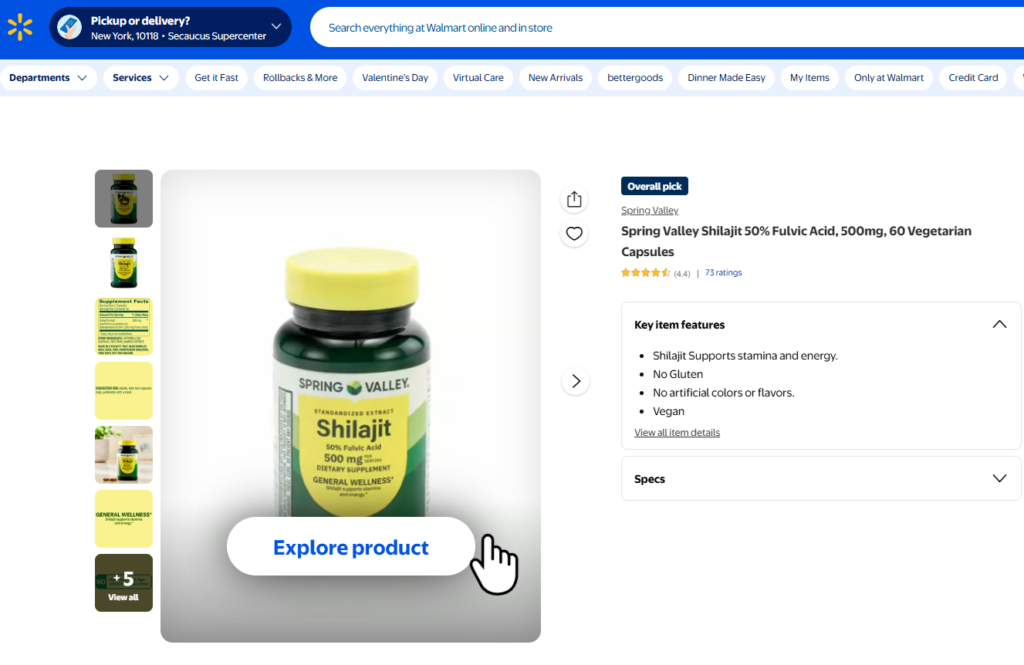
Image credit: Walmart
This is an affordable and well-rated shilajit supplement designed to support energy and general wellness. It has good reviews on Walmart.
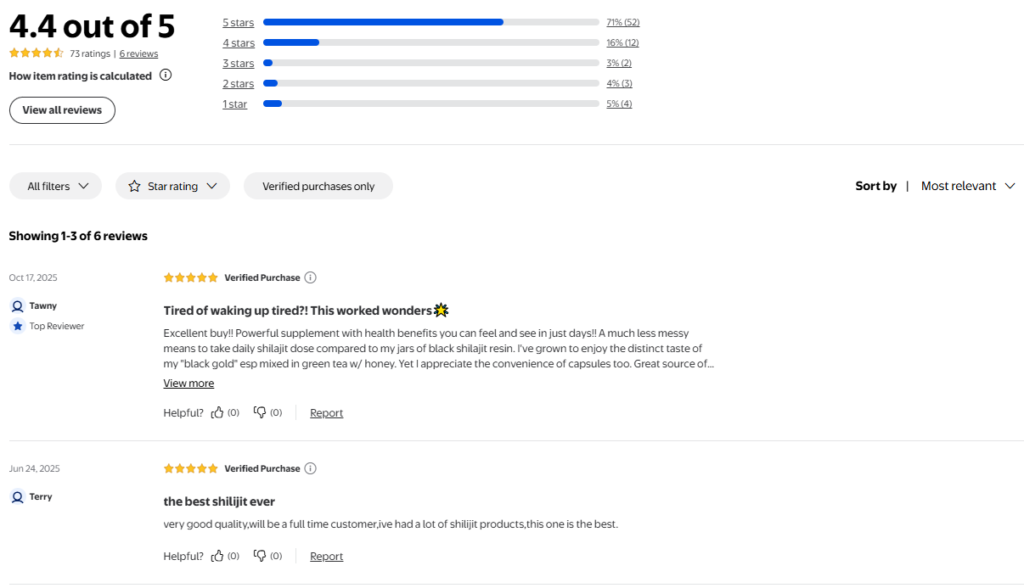
Image credit: Walmart
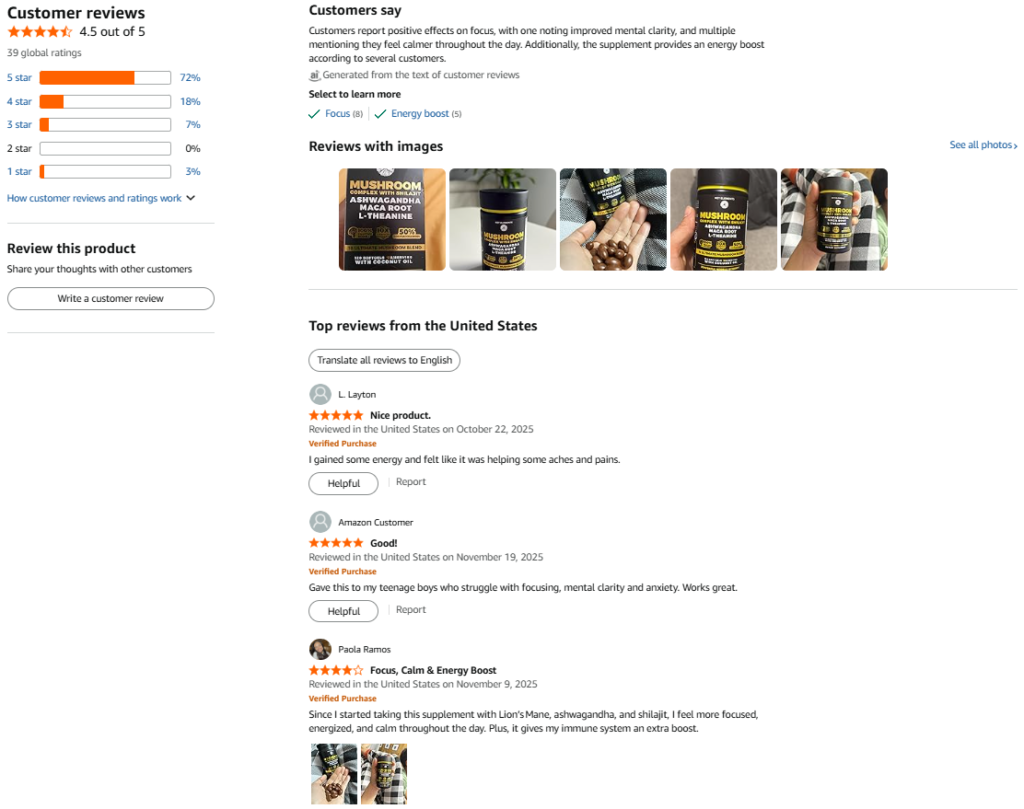
Organic Mushroom Complex with Shilajit & Coconut Oil – Lion’s Mane mushroom supplement with ashwagandha and L-theanine. A mushroom nootropic designed to support memory, focus, and immune health, available in capsule and softgel form.
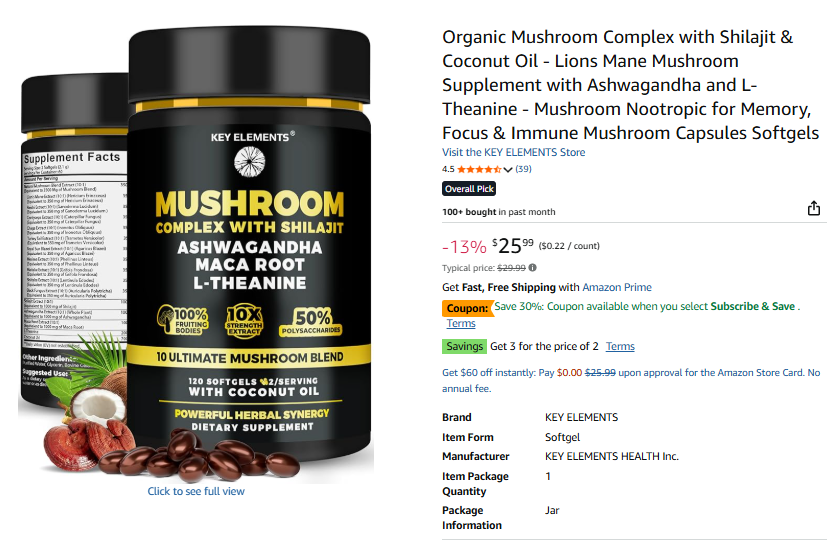
On Amazon, the product is listed under the KEY ELEMENTS Store by Om Amazon, where it has received good reviews and ratings (see attached image for reference).
Side Effects of Shilajit
- Digestive discomfort: Some people may experience nausea, stomach upset, or diarrhea, especially when starting shilajit or taking a high dose.
- Heavy metal risk (low-quality products): Poorly purified shilajit may contain heavy metals or impurities, which can be harmful if consumed regularly.
- Lower blood pressure: Shilajit may slightly reduce blood pressure, which can be an issue for people already taking blood-pressure medication.
- Not suitable for certain conditions: It is generally not recommended for pregnant or breastfeeding women, or for individuals with gout or high uric acid levels.
Final Thoughts
I hope you now understand that shilajit is a natural resin rich in minerals, and it is not a mushroom or fungus. Both are completely different.
Quality and purity matter; unregulated supplements can sometimes contain contaminants.
Always consult a healthcare provider before starting any new supplement, especially if you have existing health conditions or take medications.
You may like:
How Long Does Shilajit Take to Increase Testosterone?
Is Shilajit Good for High Blood Pressure Levels?
Resources:
Clinical evaluation of purified Shilajit on testosterone levels in healthy volunteers
Shilajit: A Natural Phytocomplex with Potential Procognitive Activity

Reviewed by: Dr. Natha Thomas, PhD (USA)
Nutrition and supplement research professional interested in nutritional science, dietary supplements, nutrient bioavailability, scientific literature, and how research findings are communicated to consumers.
View full profile →Medical review date: February 21, 2026